

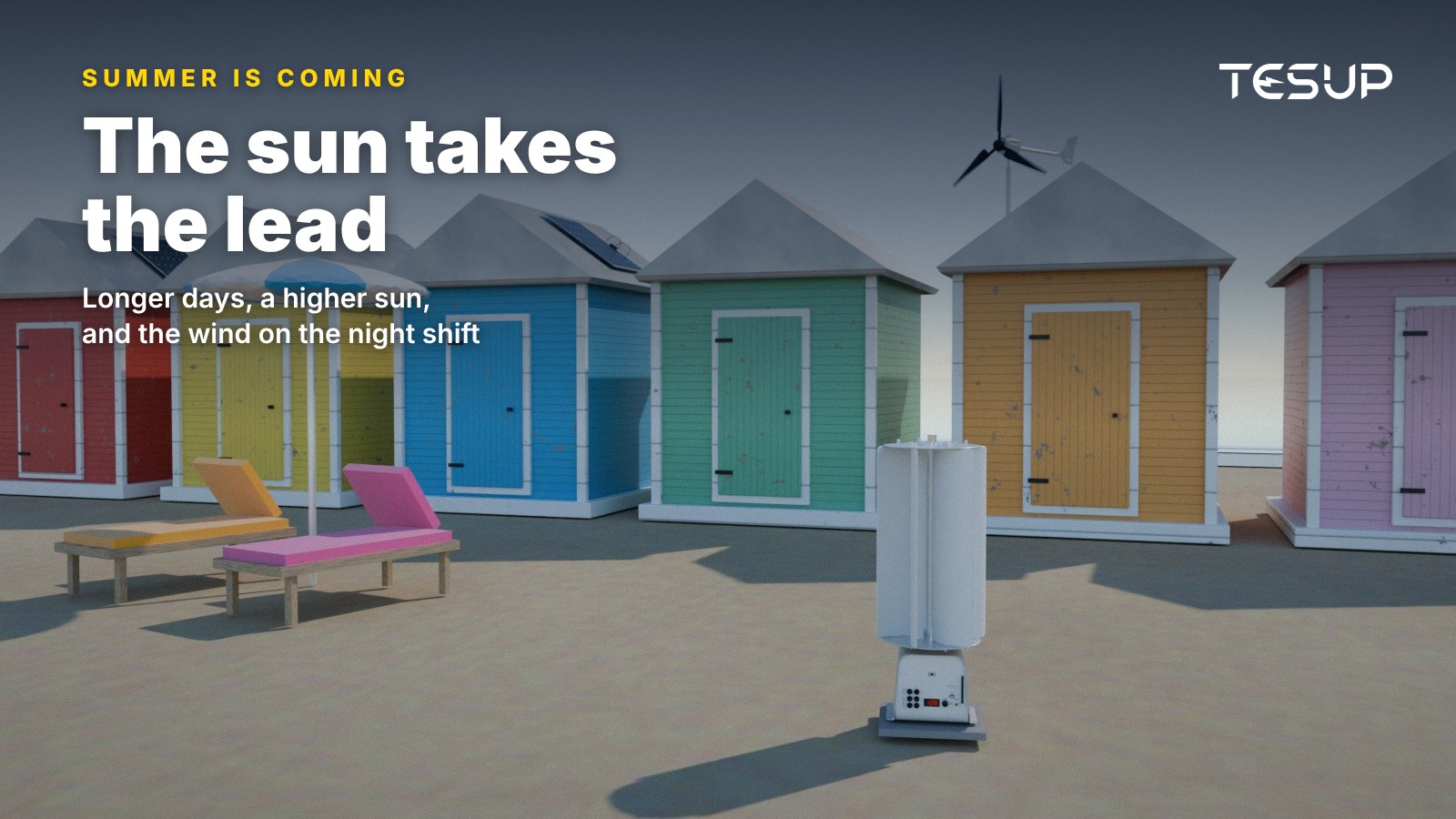
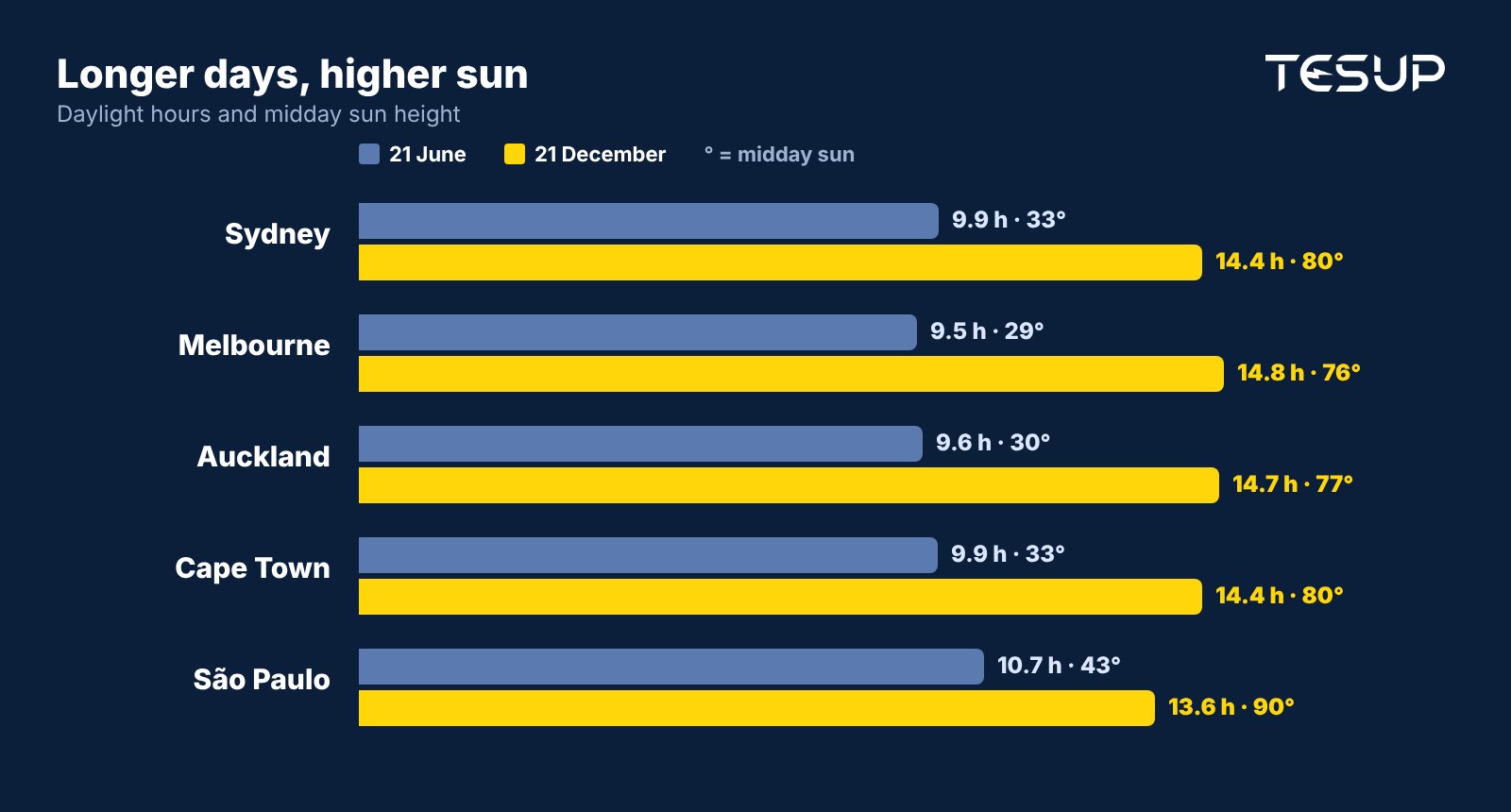
On 21 December the sun reaches its highest point of the year across the southern hemisphere. In Sydney and Cape Town it climbs to 80 degrees above the horizon at midday and stays up for almost 14 and a half hours. On the shortest day in June it managed 33 degrees and less than 10 hours. For solar panels, the best months of the year are about to begin.
Longer days, higher sun
Every city south of the equator gets the same summer gift: more hours of daylight and a sun that climbs much higher in the sky. Melbourne gains more than five hours of daylight between the shortest and the longest day. Auckland gains five. In São Paulo, which sits almost exactly on the Tropic of Capricorn, the midday sun on 21 December stands practically straight overhead.
A higher sun means more energy
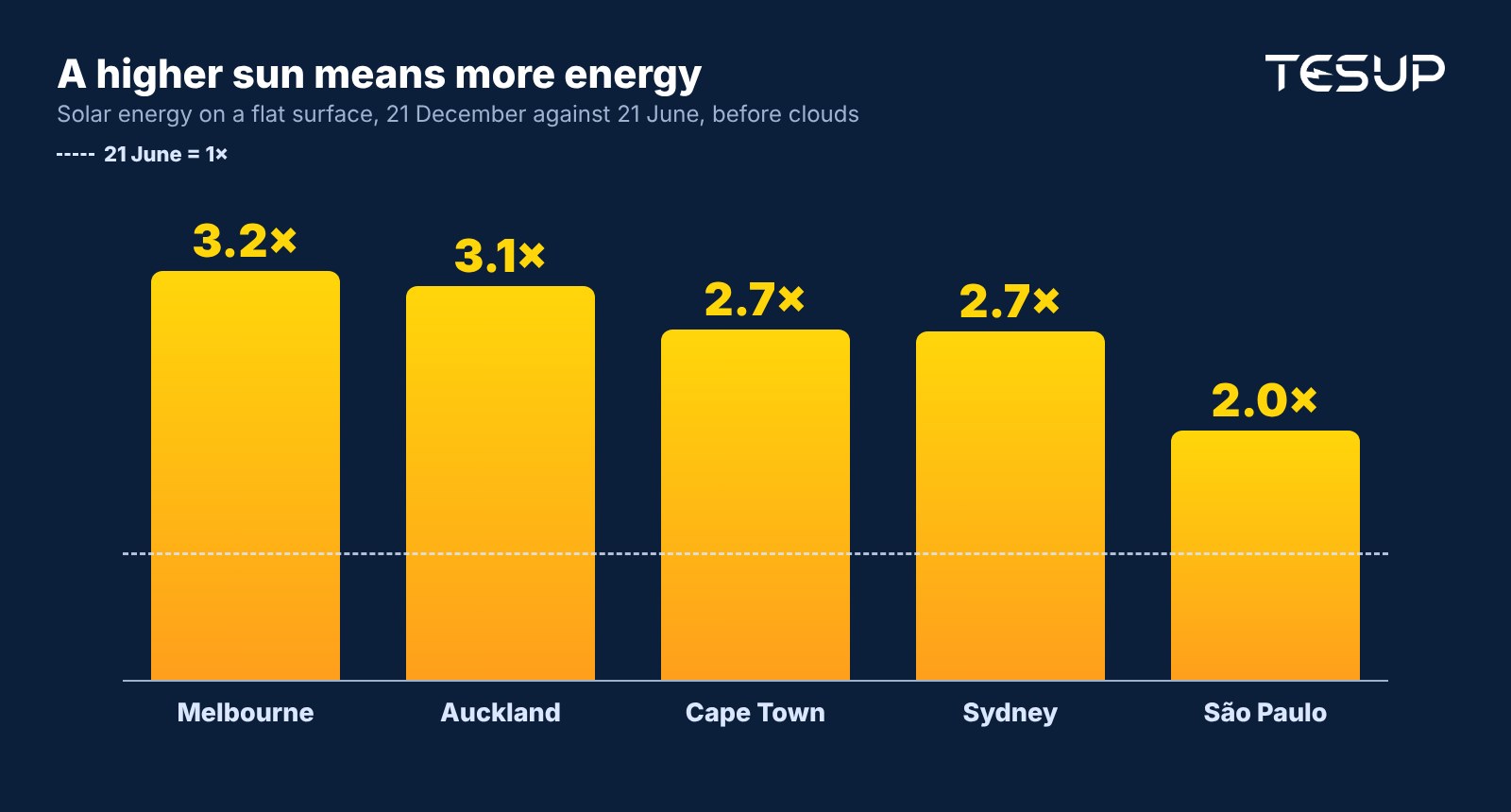
Longer days are only half of the story. When the sun is high, its light hits the ground more directly and travels through less air on the way. Put the two together and, before clouds are counted, a flat surface in Sydney or Cape Town receives about 2.7 times as much solar energy on 21 December as on 21 June. In Melbourne and Auckland it is more than three times as much.
Solar where rigid panels cannot go
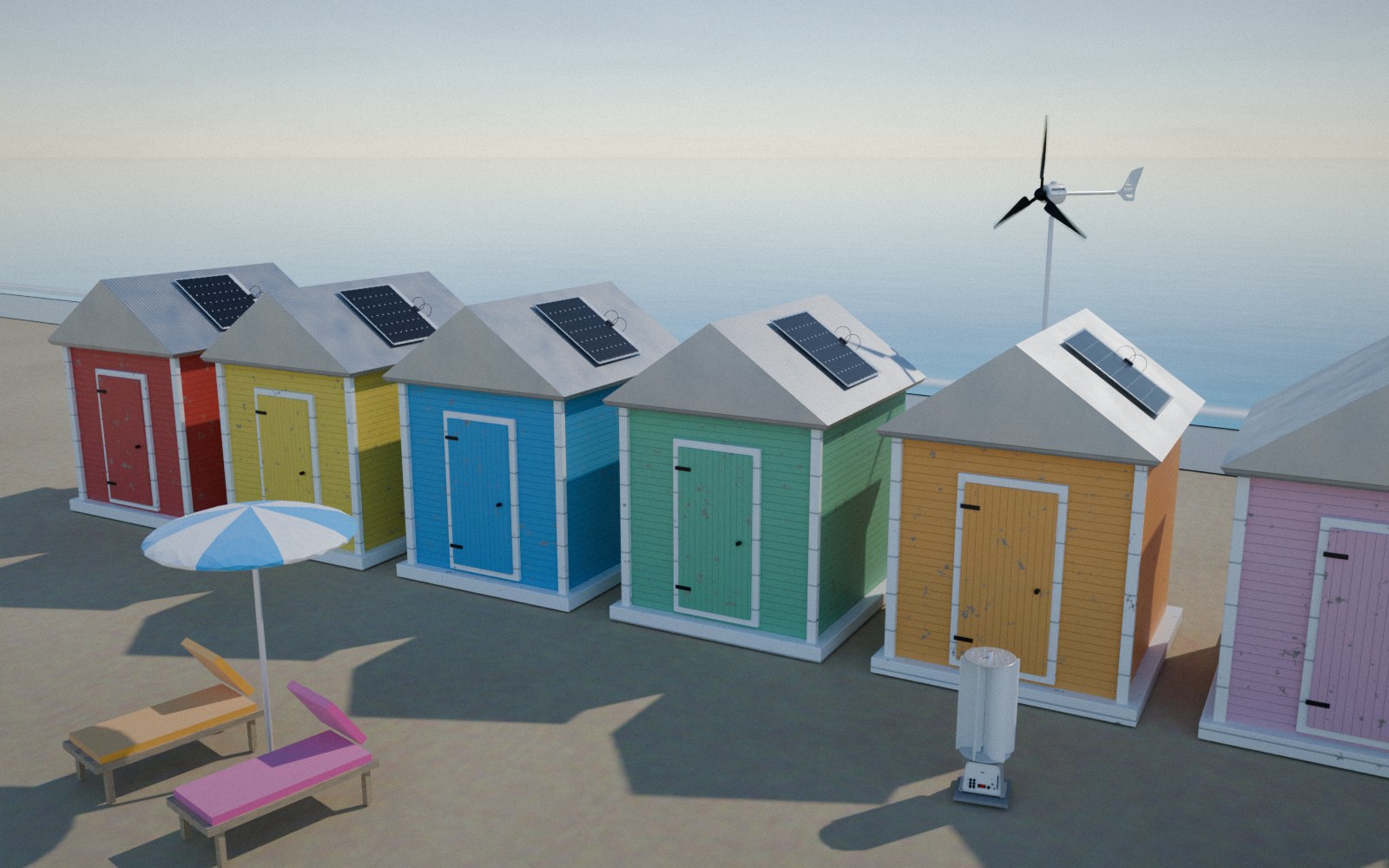
Our flexible solar panels are made for exactly this season. Each panel delivers 230 W from about one square metre, and they ship as a pair for 460 W in total. They are thin and light, bend to a curve and fix down without a heavy frame, so they suit caravans, boats, sheds, garden buildings and curved or weight-sensitive roofs. The ETFE front sheet is anti-reflective and self-cleaning.
The wind does not take summer off
Summer is also the season of the sea breeze. On hot afternoons the land warms faster than the ocean, and cooler air flows in from the coast. Cape Town's famous south-easter, the Cape Doctor, blows mostly from spring through summer. And when the sun sets, the panels stop while the wind keeps going. Atlas with Low-Wind blades starts turning at just 2 metres per second, so it keeps working through the evening and the night.
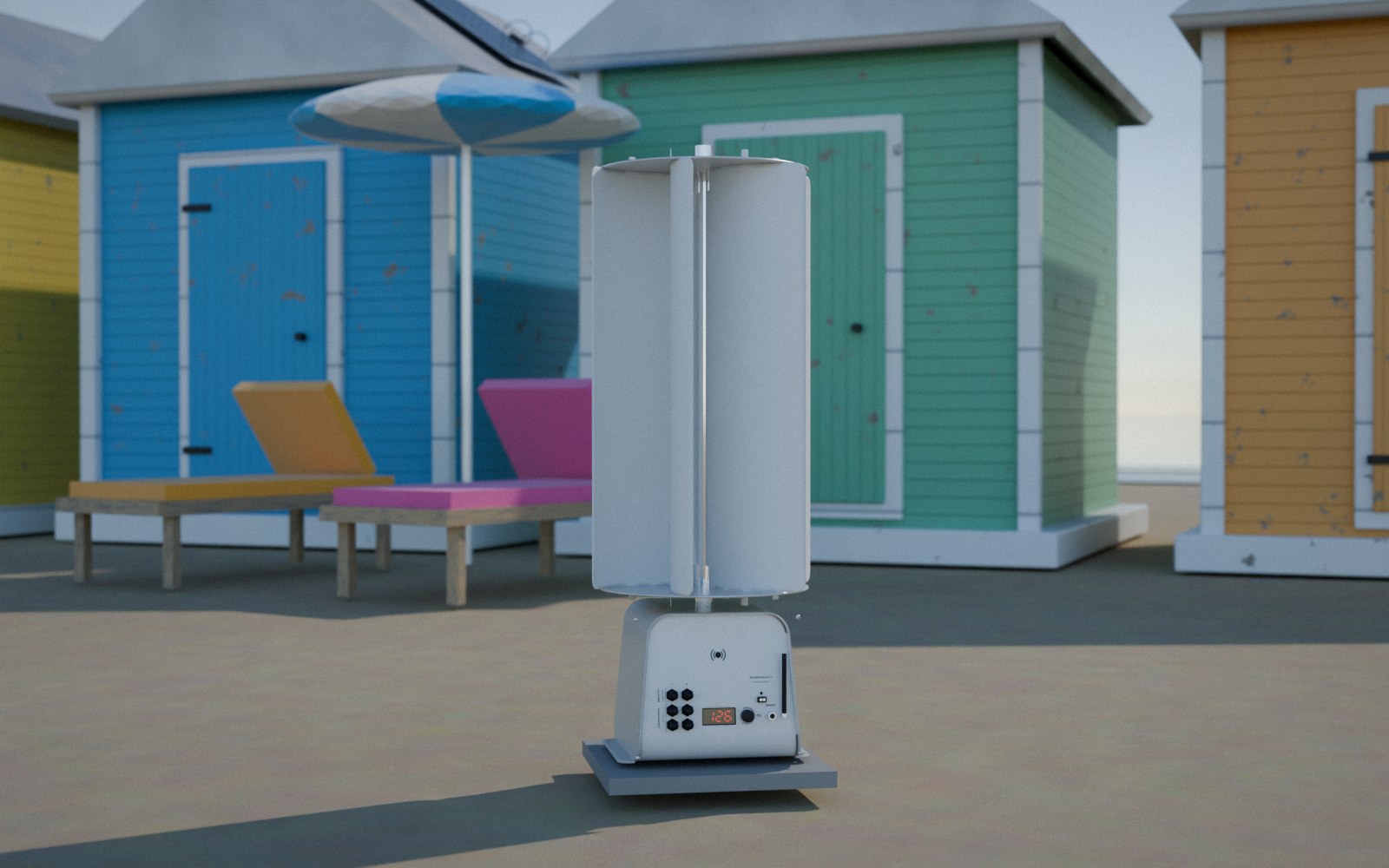
Sun by day, wind round the clock
This is why household wind turbines and flexible solar panels work so well together. From December to February the sun does the heavy lifting during the day. Atlas and Magnum cover the evenings, the nights and the cloudy spells, and they take the lead again when the days get short. Together they spread your home's own power across the day and across the year.
Daylight hours and midday sun height: calculated with standard solar position formulas for 21 June and 21 December 2026. Solar energy: daily total reaching a horizontal surface at the top of the atmosphere, calculated for each city. Product figures: TESUP product data.
Make the long days count
Flexible solar panels for the sunny hours. Atlas catches wind from any direction, and Magnum is made for open, steady wind.
Explore AtlasExplore Magnum