

From the garden, a household wind turbine looks simple: a few blades turning on a pole. Inside, it is a precise machine. Dozens of metal, copper and electronic parts have to fit together exactly, survive years of wind and weather, and turn moving air into safe, usable electricity. Much of that work still depends on skilled hands.
Dozens of parts, one machine
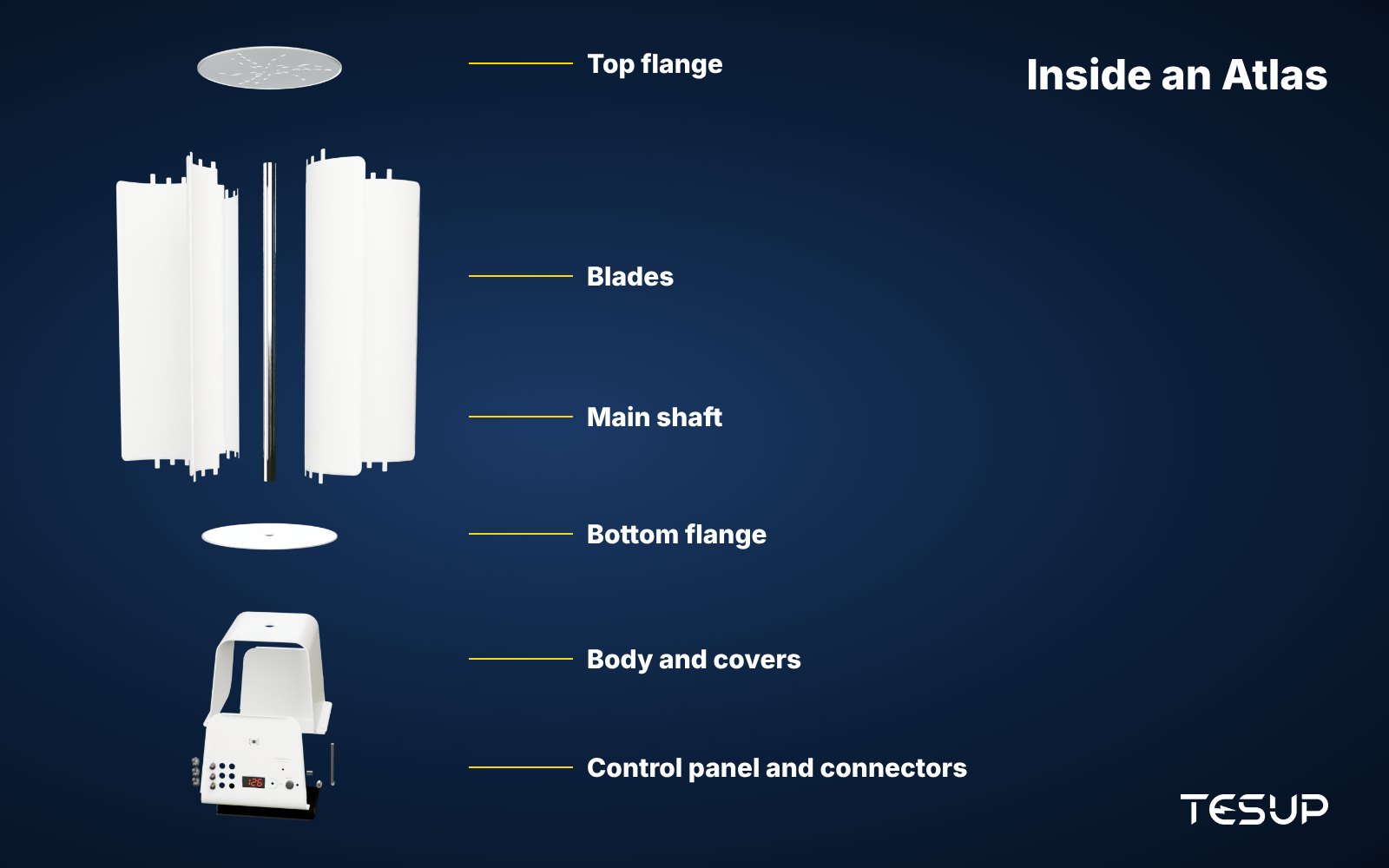
Take the Atlas apart and you find a top and a bottom flange, a set of curved aluminium blades, a main shaft, a generator with copper windings and permanent magnets, bearings, a body made of covers and side sheets, a control panel with connectors, a display and a sensor port, and the cabling and fasteners that hold it all together. Each part is made to its own drawing, and each one has to meet the next within fractions of a millimetre.
Metal that has to be exactly right
Metal is where a wind turbine is won or lost. Each Atlas blade starts as a flat sheet of 1.2 mm aluminium. It is cut, then formed into a precise curve, because the shape of that curve decides how much energy the blade can take from the wind. The flanges that hold the blades are cut to tight tolerances, so the rotor spins true and stays balanced.
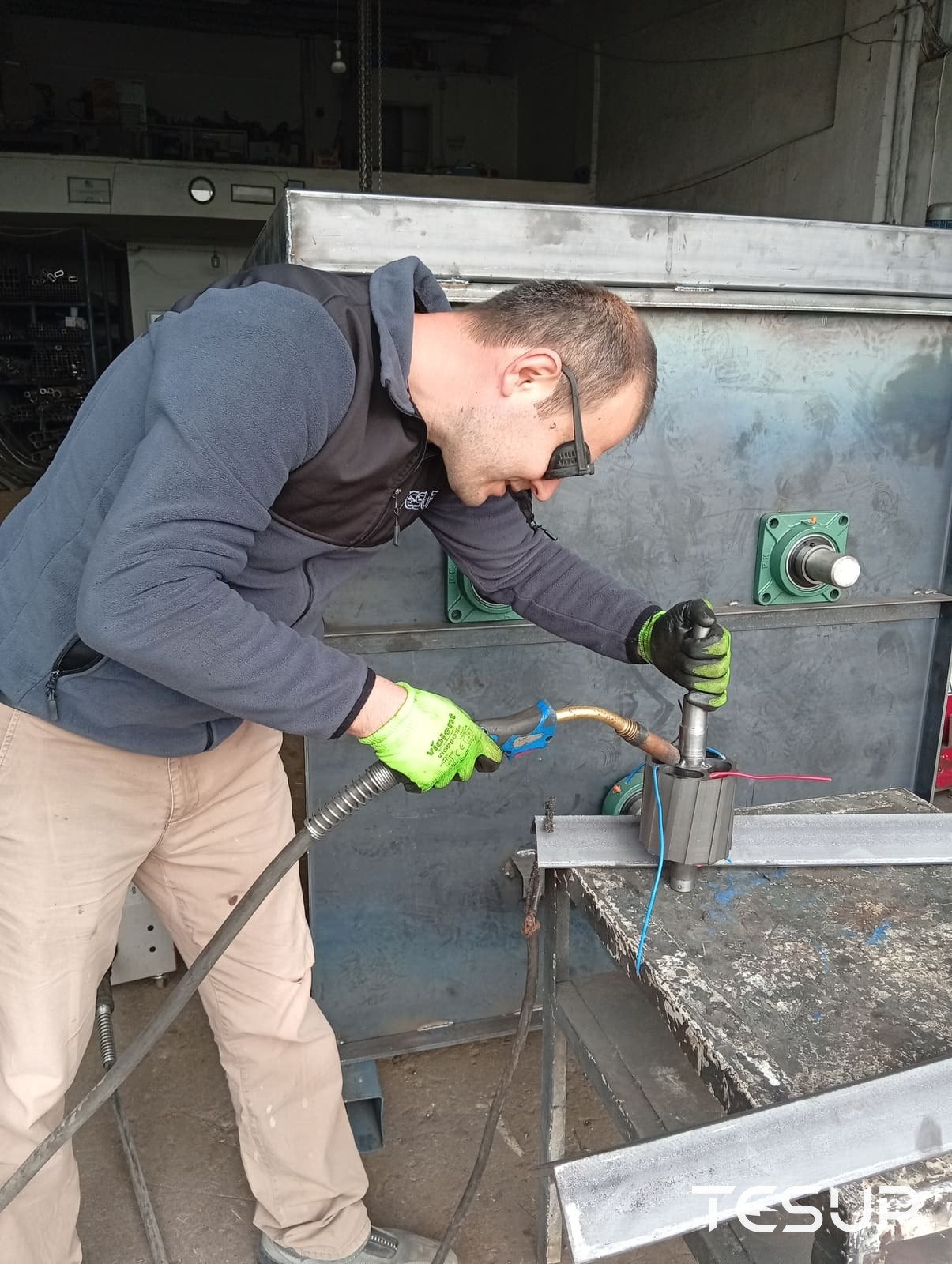
Shafts are machined and fitted by hand, and steel frames and fixtures are welded by trained welders. None of this can be rushed: a weld that is slightly off or a shaft that is slightly out of line shows up later as noise, vibration or wear.
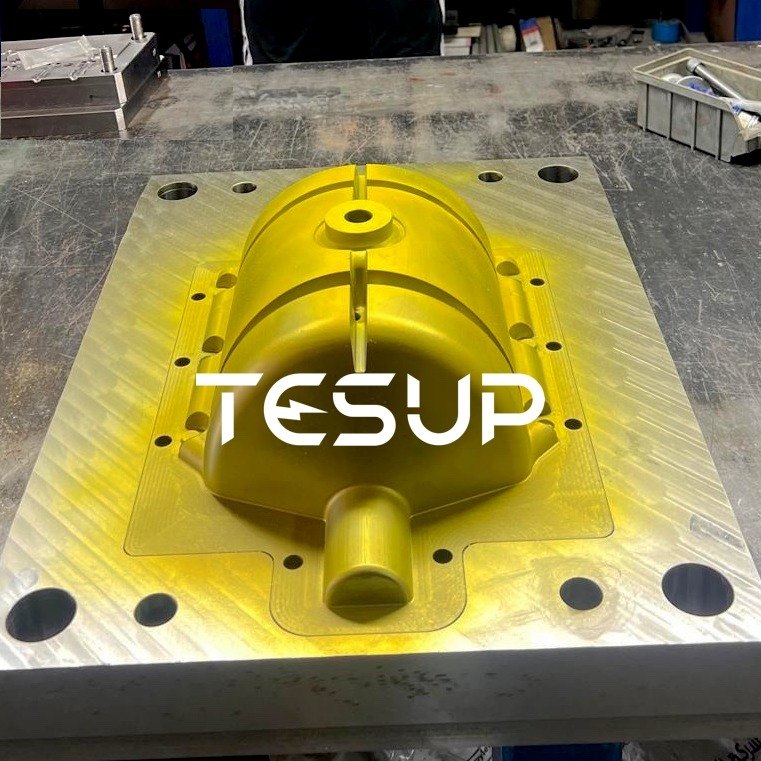
The Magnum body is aluminium, made in precision moulds so that every body has exactly the same shape and fit.
The generator: copper, magnets and patience
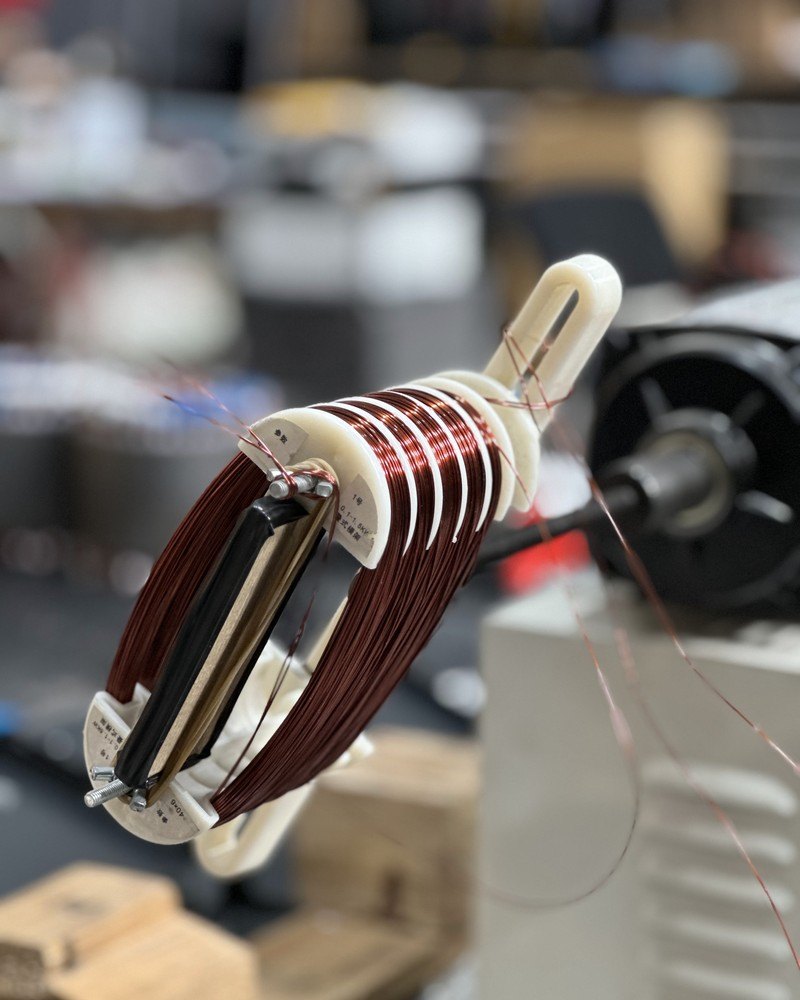
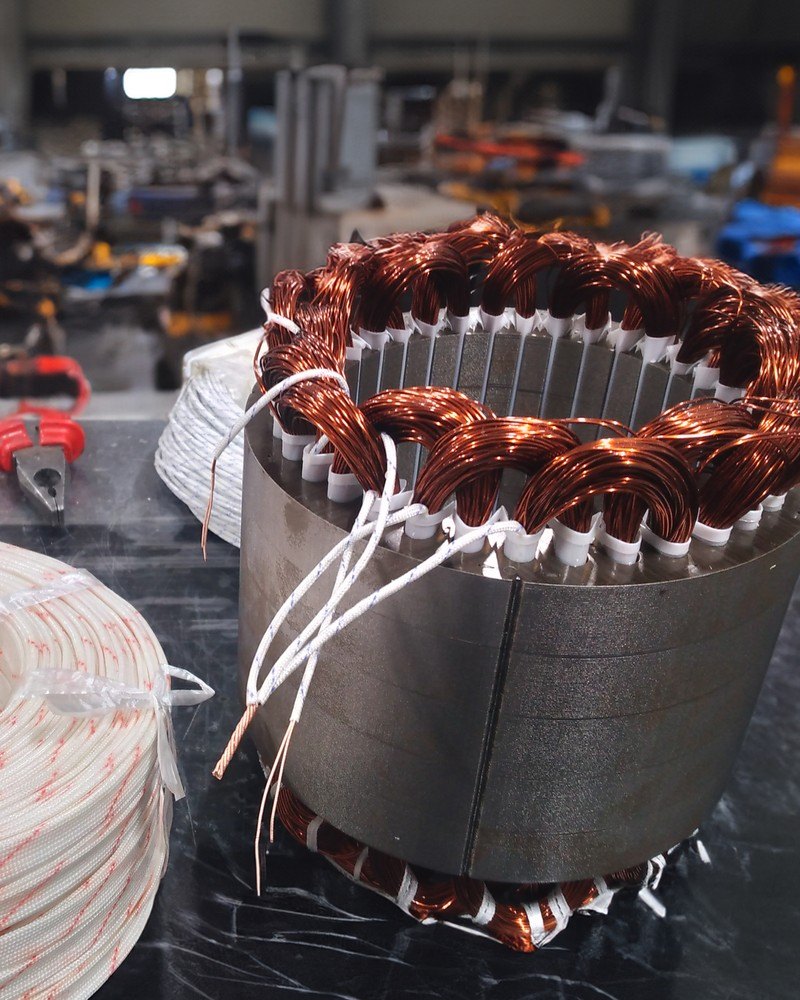
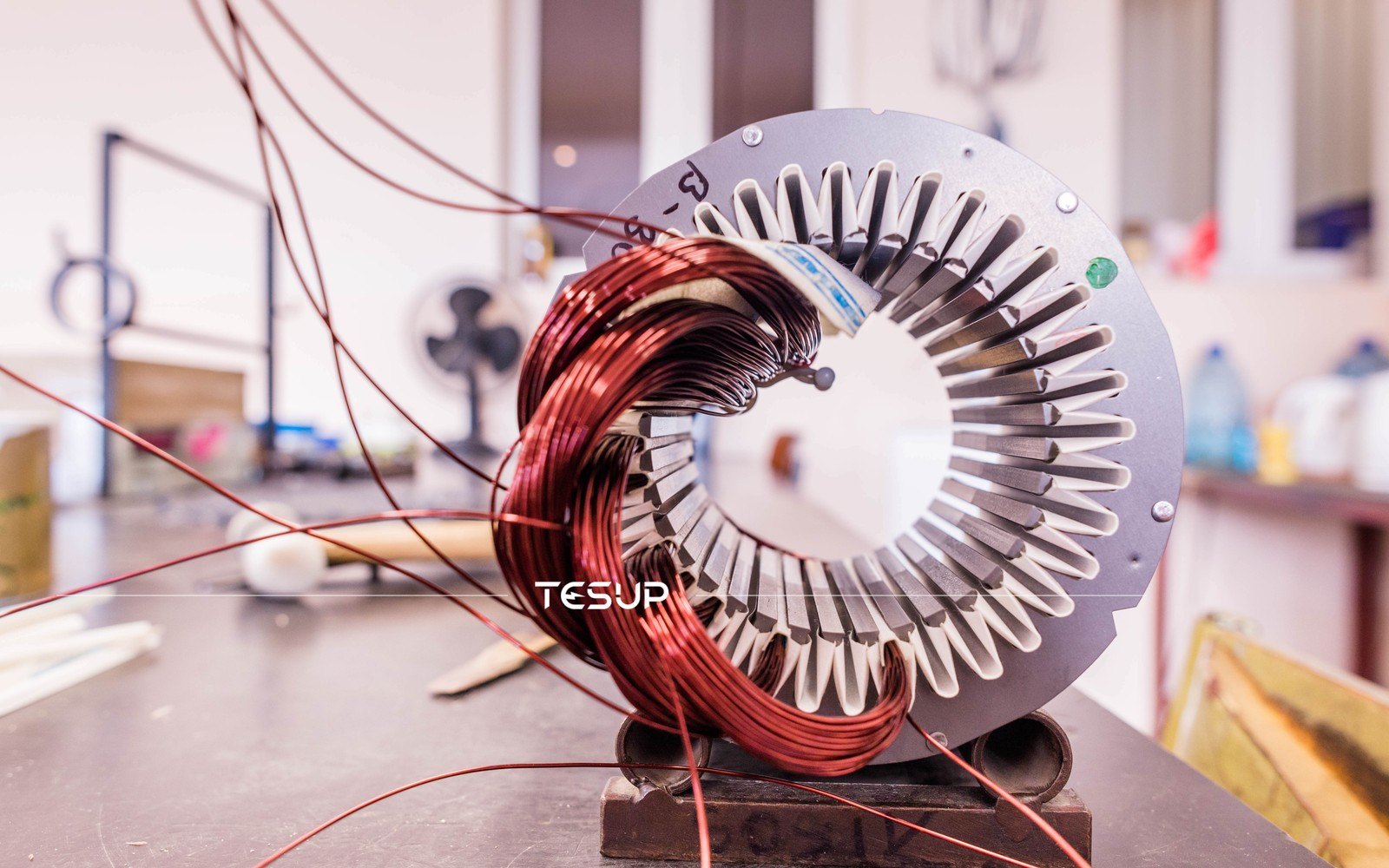
The generator is the heart of the turbine. Enamelled copper wire is wound into coils, the coils are fitted into the stator, and the windings are tied, insulated and checked. Permanent magnets turn the spinning rotor into electricity. It is careful, repetitive work, and a single loose turn or a damaged coating can cost efficiency for years.
Electronics you can rely on
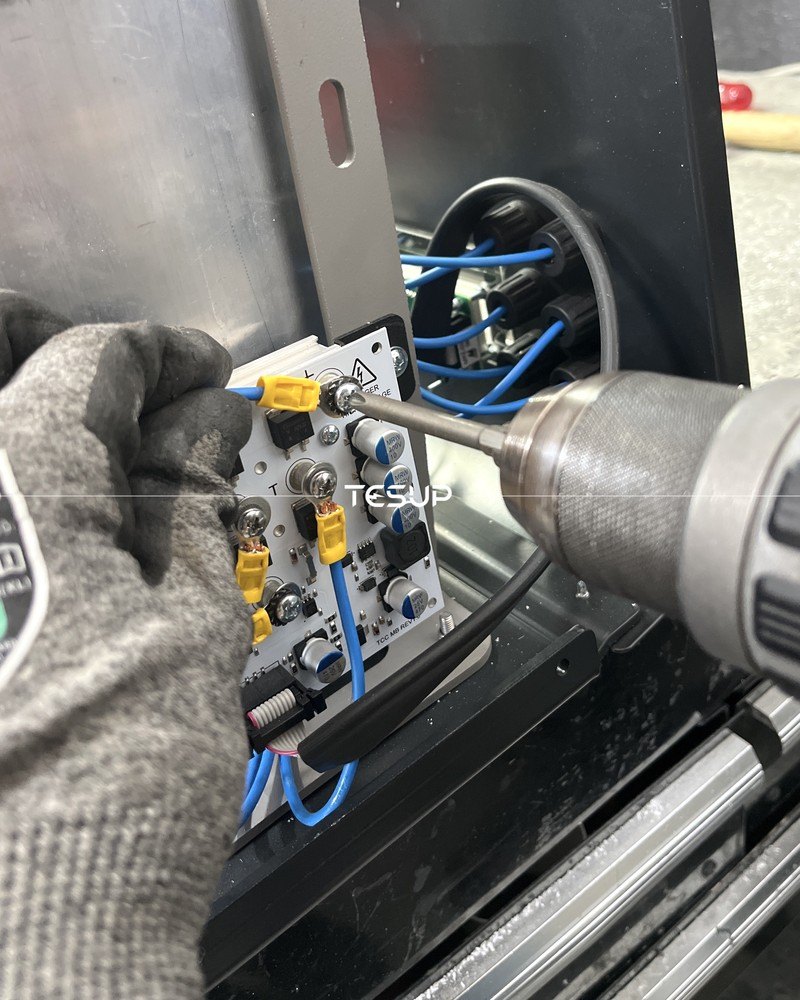
Power from the generator goes through our charge controller, which manages charging and connects to the MyTESUP app. Every controller is assembled and wired by hand, and every connection is checked before the cover goes on.
Tested, then packed with care
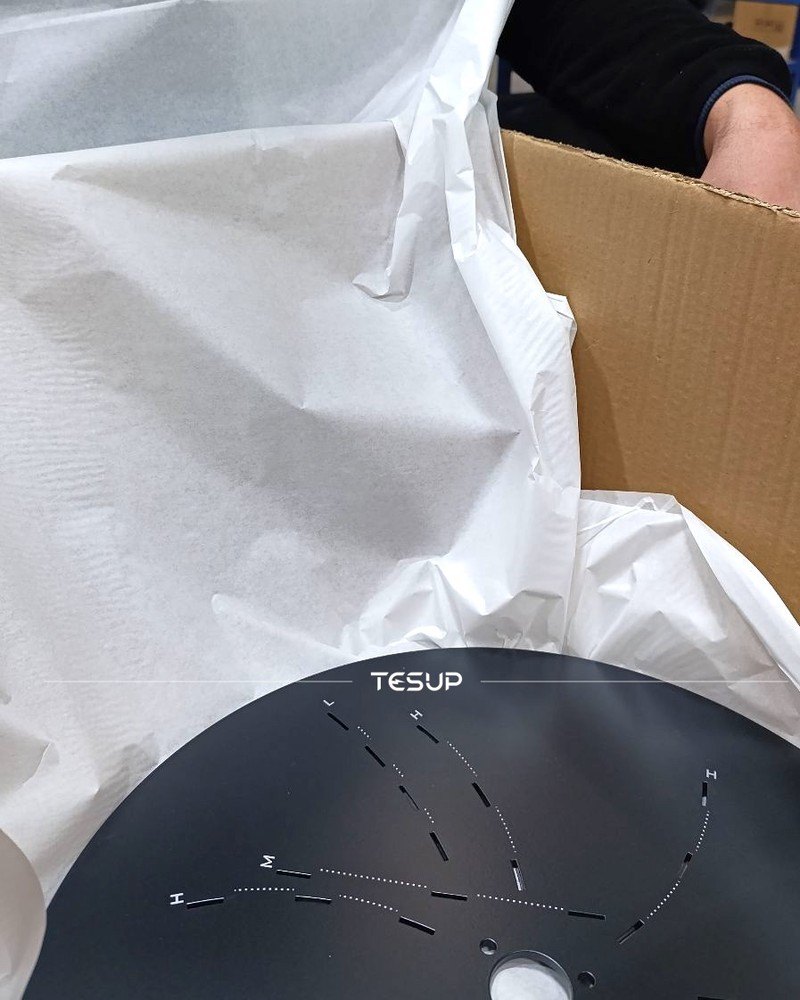
Every unit is tested before it ships. Then it is packed with care, so that it reaches you in the condition it left us.
Why this matters to you
A wind turbine works outdoors, through storms, frost and summer heat, for many years. Precise metalwork, careful winding and checked electronics are what make it quiet, efficient and safe for that long. It is also why we back our turbines with a 2-year warranty and a support team that knows every part inside them.
Built to work for years
Atlas catches wind from any direction. Magnum is made for open, steady wind.
Explore AtlasExplore Magnum