

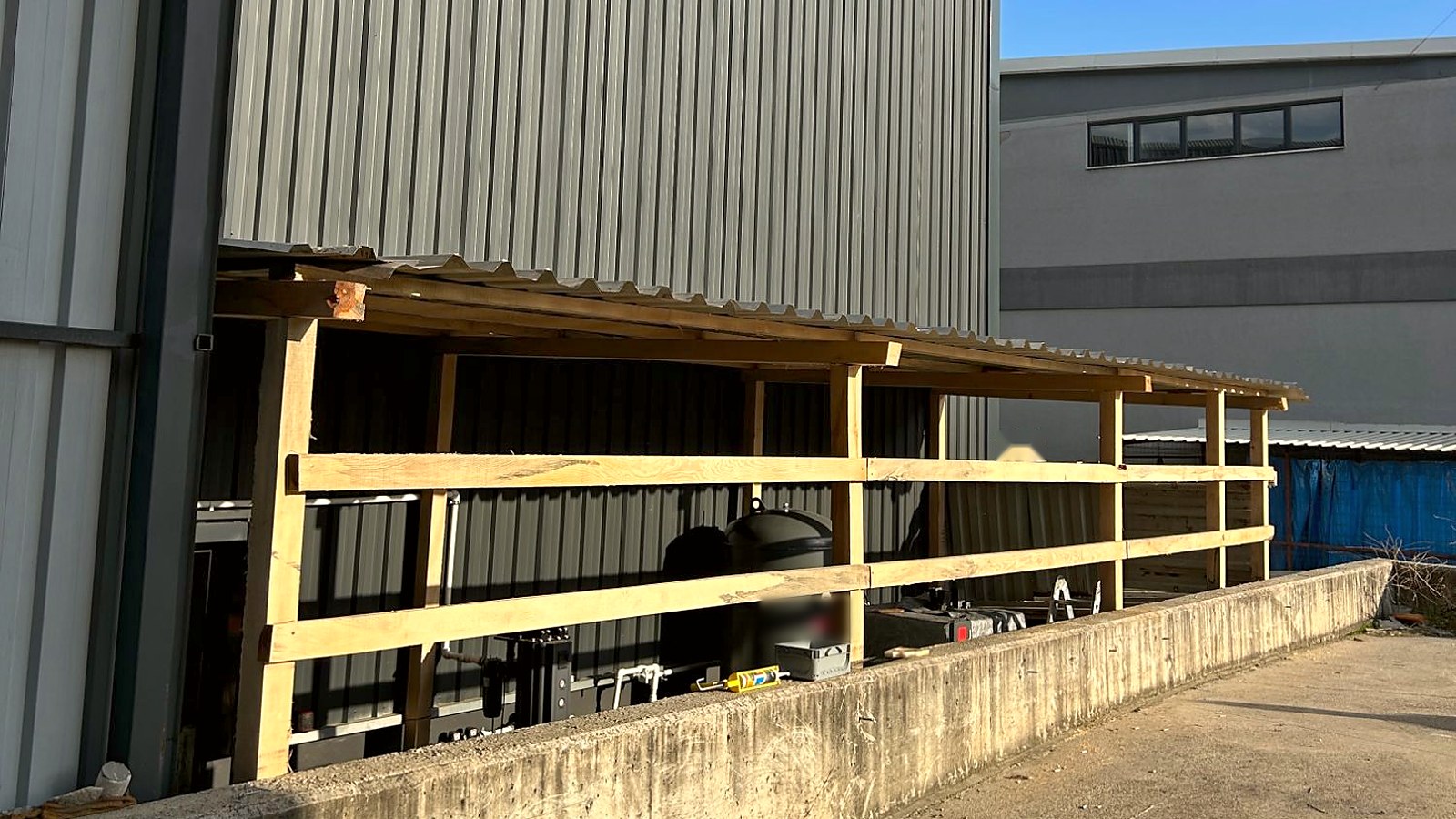
Behind every turbine we ship is a workshop full of people, tools and machines. This month we made one of those workshops safer: the high-pressure air compressor that feeds the production line has moved out of the hall and into its own shelter outside.
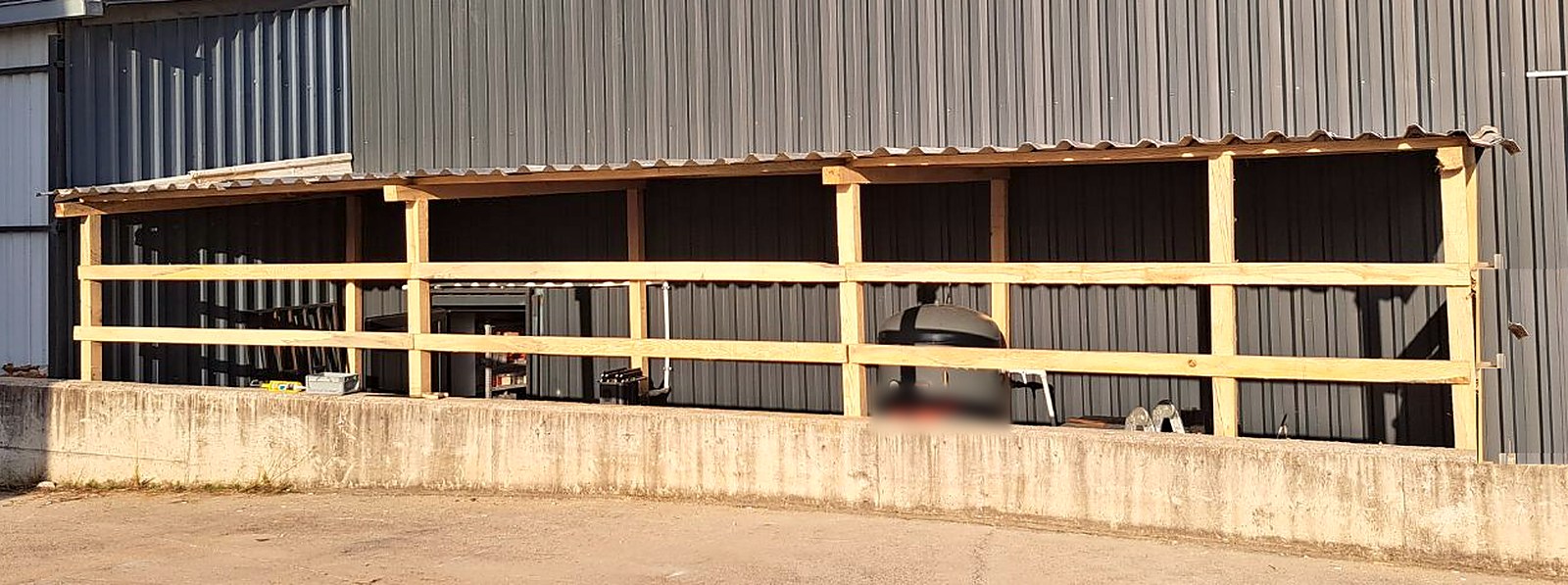
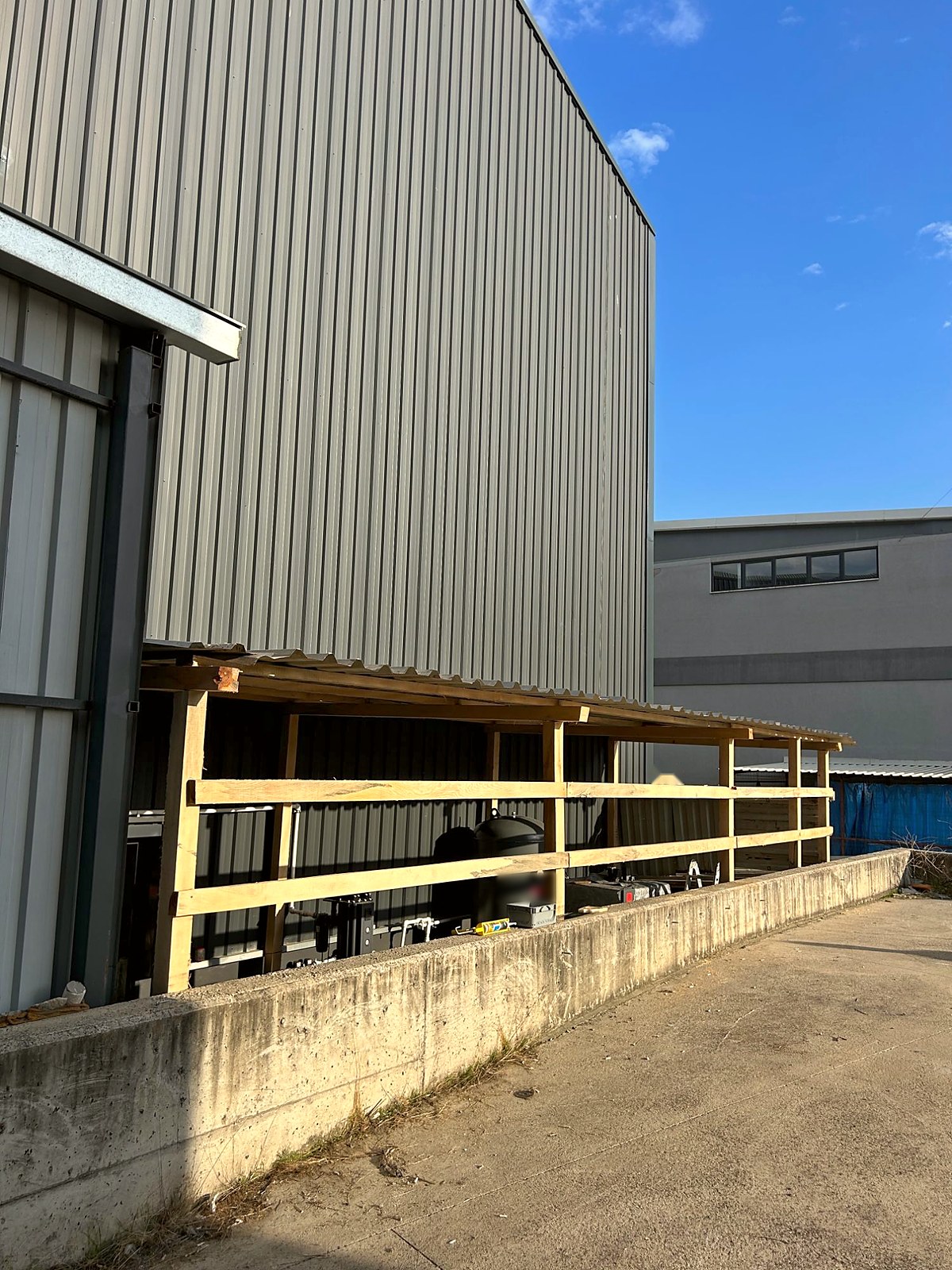
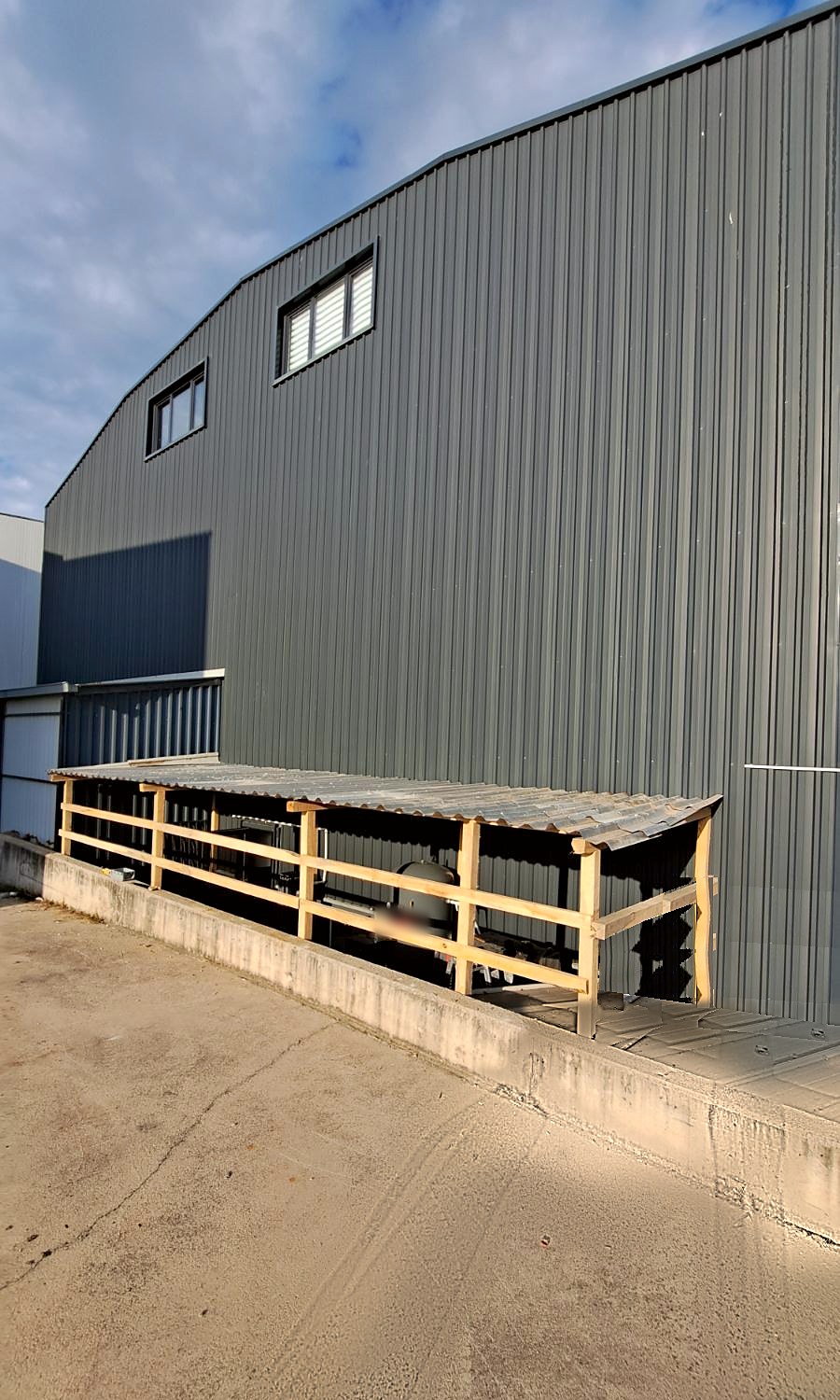
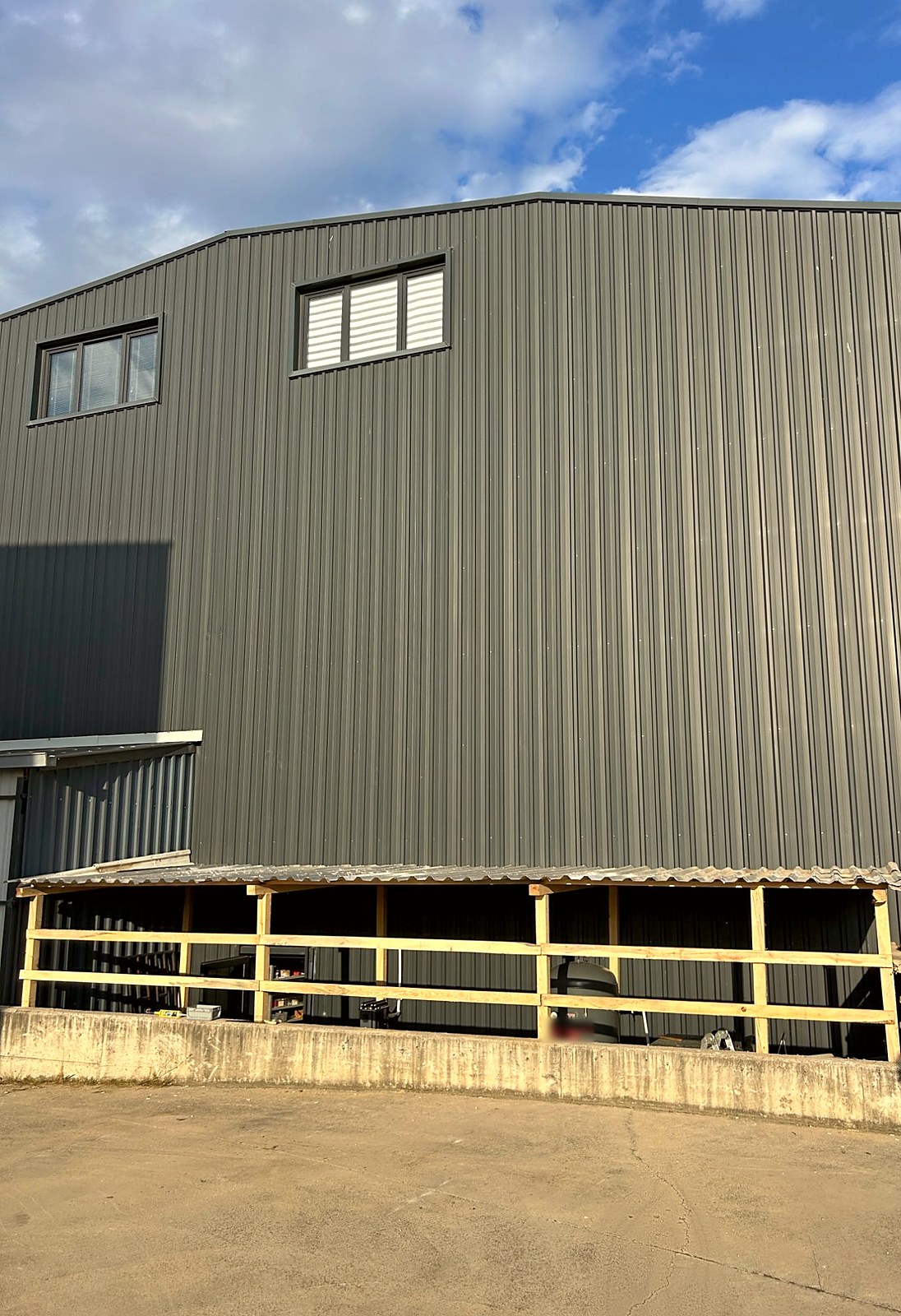
Compressed air powers much of the daily work in a turbine workshop, from pneumatic tools to blow-off guns. Until now the compressor and its air receiver stood inside the production hall, a few steps from the workbenches. They now sit along the outside wall under a new roof, behind timber rails, and the air reaches the hall through a fixed line in the wall.
Why the compressor had to go
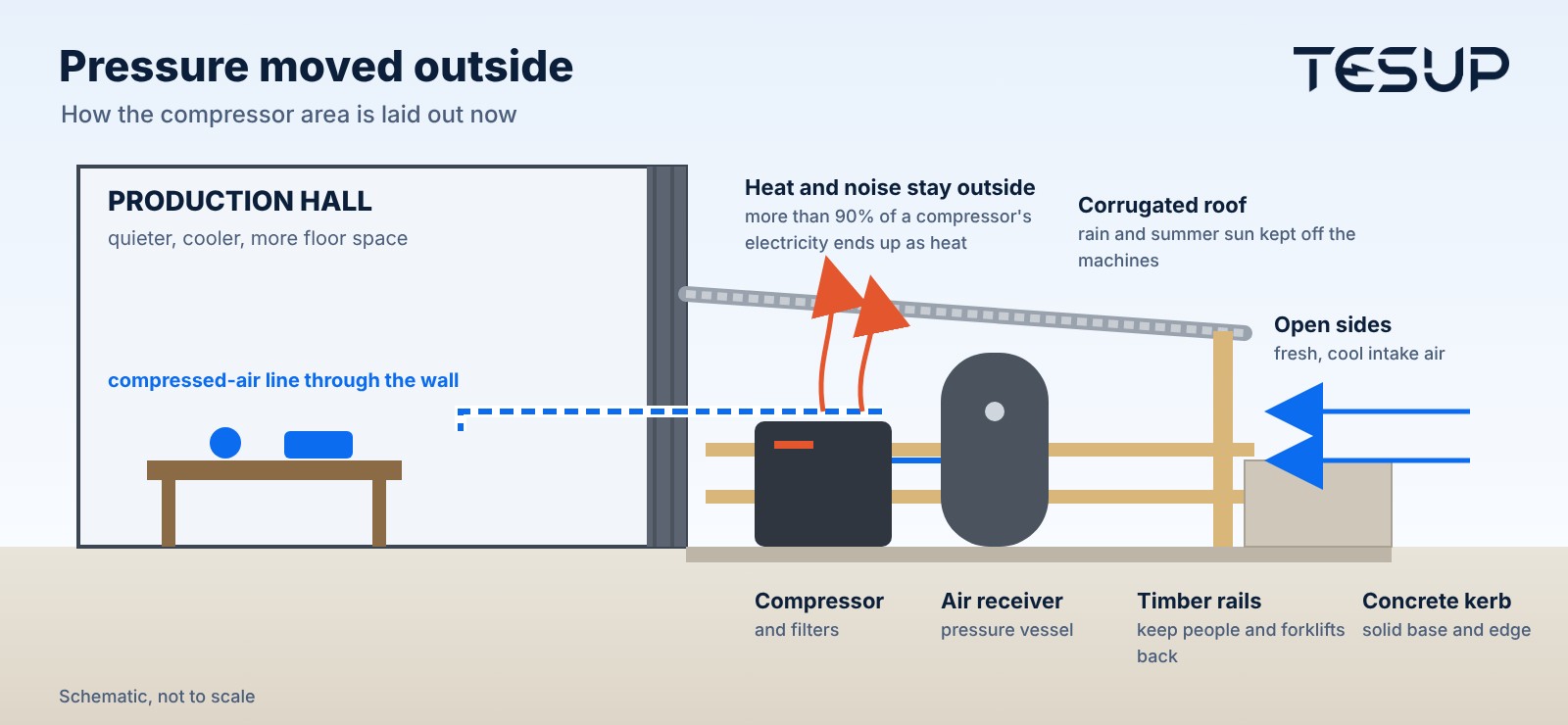
A compressor is one of the most useful machines in any workshop, and one of the ones that deserve the most respect. Its air receiver is a pressure vessel that stores a great deal of energy, and the UK Health and Safety Executive lists over-pressure, explosion and overheating among the main hazards of compressed-air systems. A compressor is also loud, and the Carbon Trust estimates that more than 90 percent of the electricity it uses ends up as heat. Inside a production hall all of that sits right next to the people building turbines. Outside, it does not.
How we built it
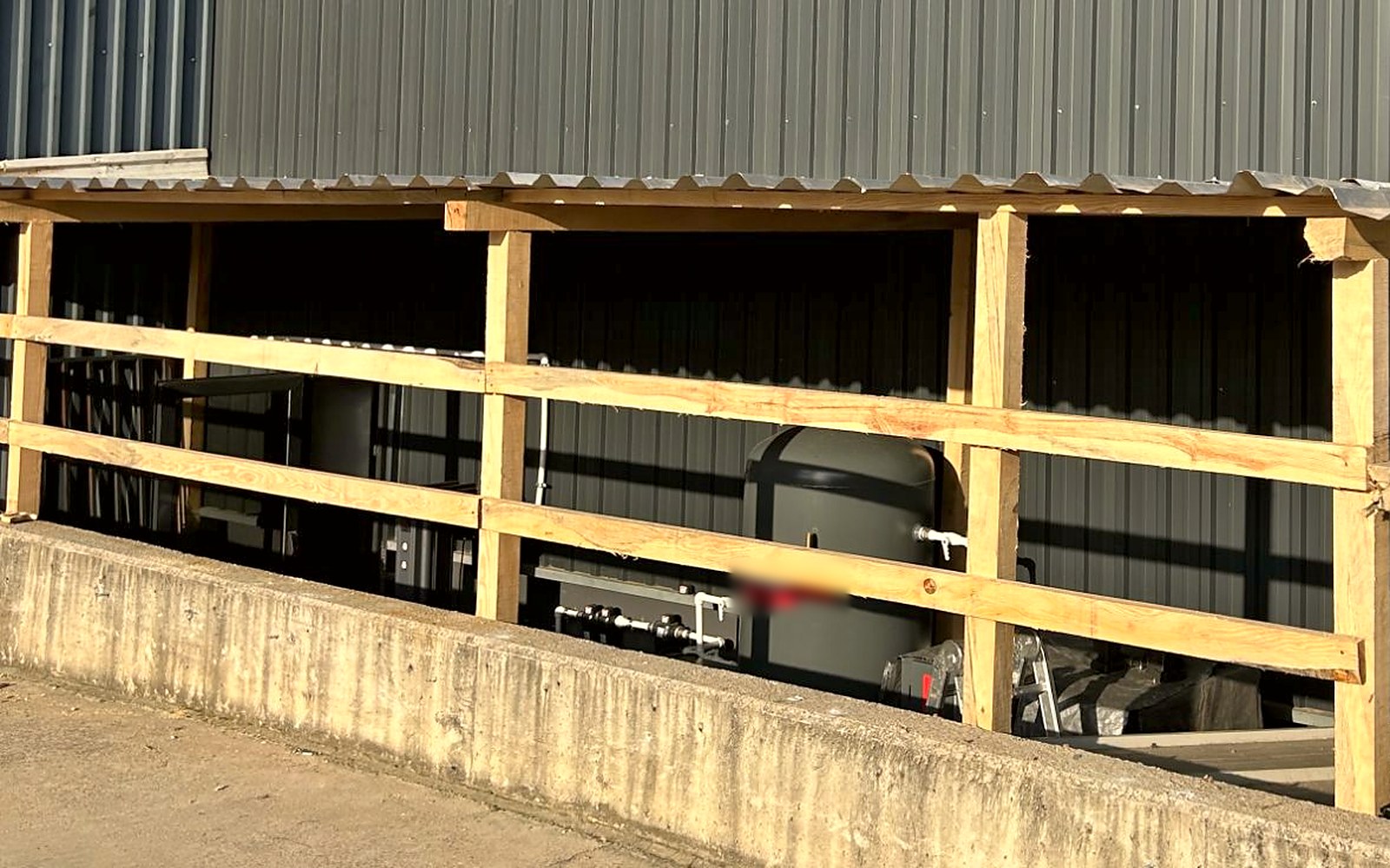
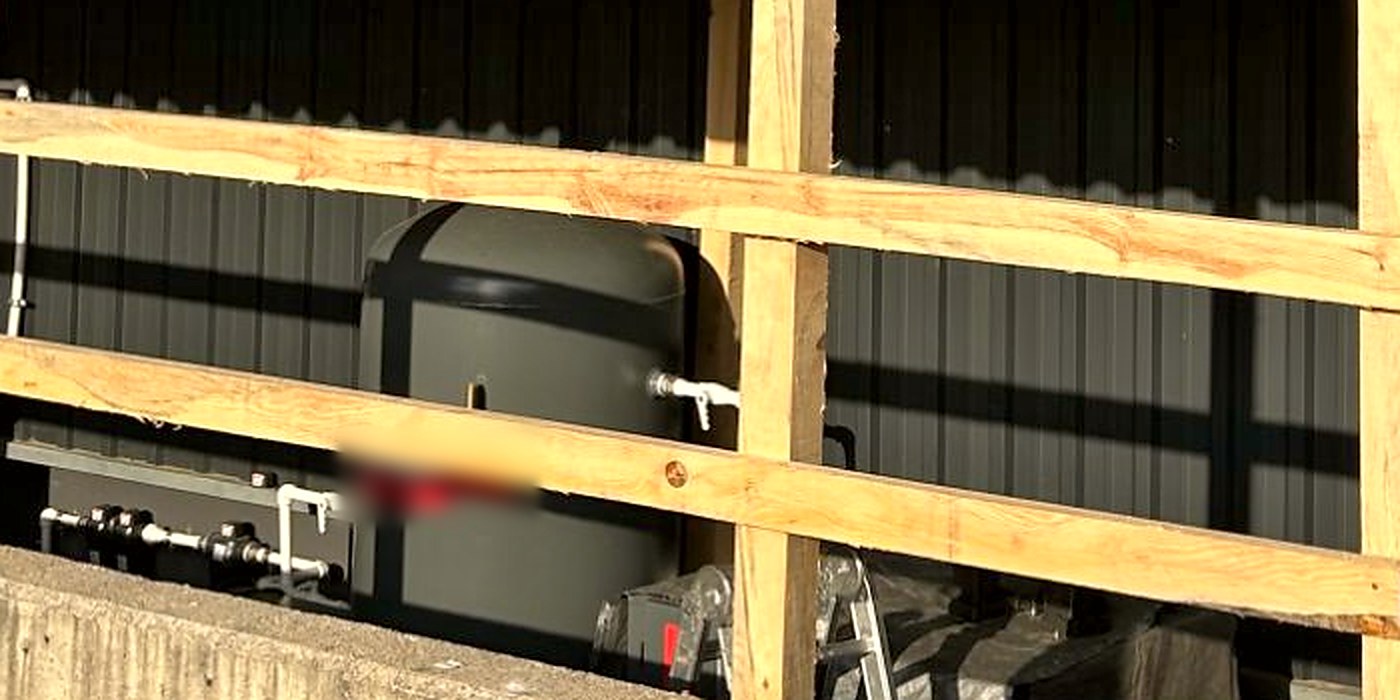
The shelter is built from sawn timber posts, beams and rails, with corrugated roof sheets that slope away from the building wall so rainwater runs off away from the machines. It stands on the existing concrete kerb that runs along the building, which gives the equipment a solid, level base and a clear edge to the yard. The front and the far end are open above the rails, so air can move freely around the compressor, and two rows of rails keep people and forklifts at a safe distance while still allowing easy access for servicing.
Six safety gains
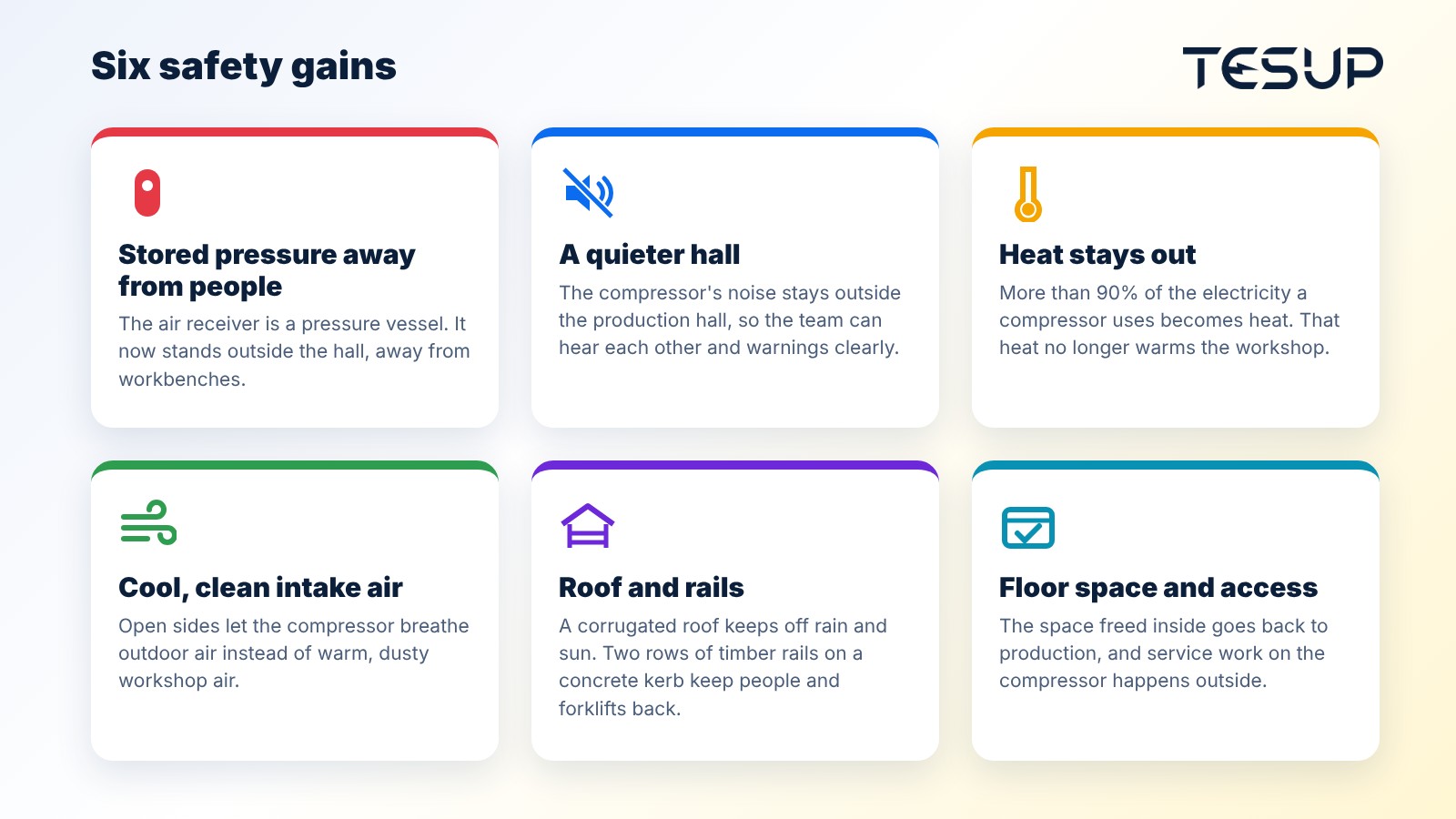
The move was simple, but it changes a lot inside the hall. The pressure vessel is no longer next to the workbenches. The hall is quieter, so the team can talk and hear warnings clearly. The compressor's heat goes into the open air instead of the workshop. The compressor draws cooler, cleaner outdoor air instead of warm, dusty air from the hall. The roof and rails protect the machines and keep people back. And the floor space it used to take up now goes back to production.
Safety is part of the product
Moving the compressor outside is a small building project with a big effect on everyday work in the hall. We believe a calm, safe workshop builds better turbines, and every Atlas and Magnum we ship is assembled and tested in workshops like this one.
Sources: Health and Safety Executive, HSG39 Compressed air safety; Carbon Trust, compressed air and heat recovery guidance. Photographs: TESUP.
Built with care, from the workshop up
Every Atlas vertical and Magnum horizontal wind turbine is assembled and tested in our own workshops. See the turbines that come out of them.
Discover Atlas Discover Magnum