

Some orders make the whole team smile. This week one came from Technological University Dublin, Ireland's first technological university: an Atlas vertical wind turbine, the Atlas body together with a set of Atlas blades, on its way to Dublin.
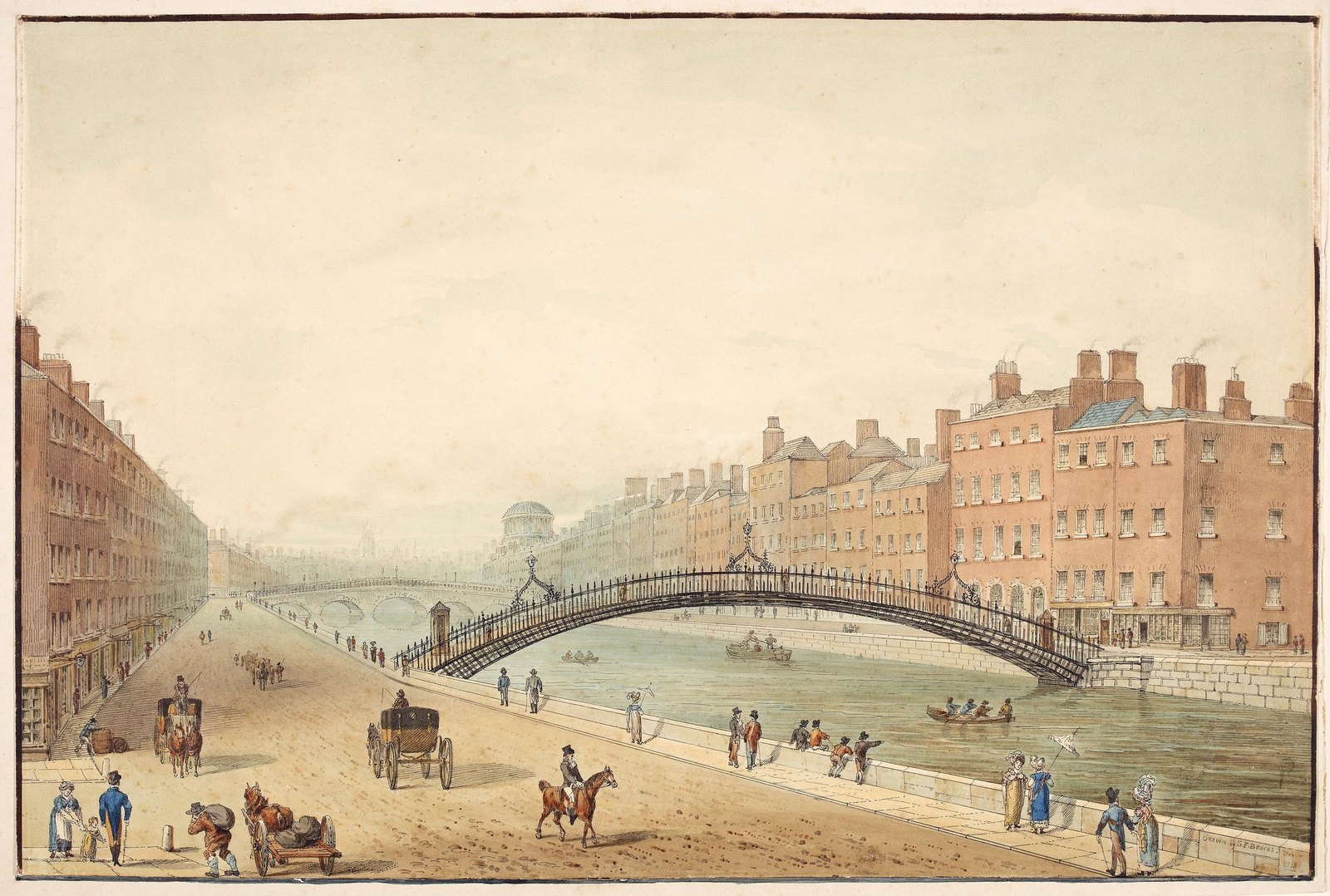
We are proud every time an Atlas goes to a home, a farm or a workshop. When it goes to a university, it feels a little different. Universities are where engineers learn to measure, test and question things, and where the next generation of the energy transition is trained. So let us take a short walk through Dublin, a city built by engineers, on a bay that never runs short of wind.
A university of engineers
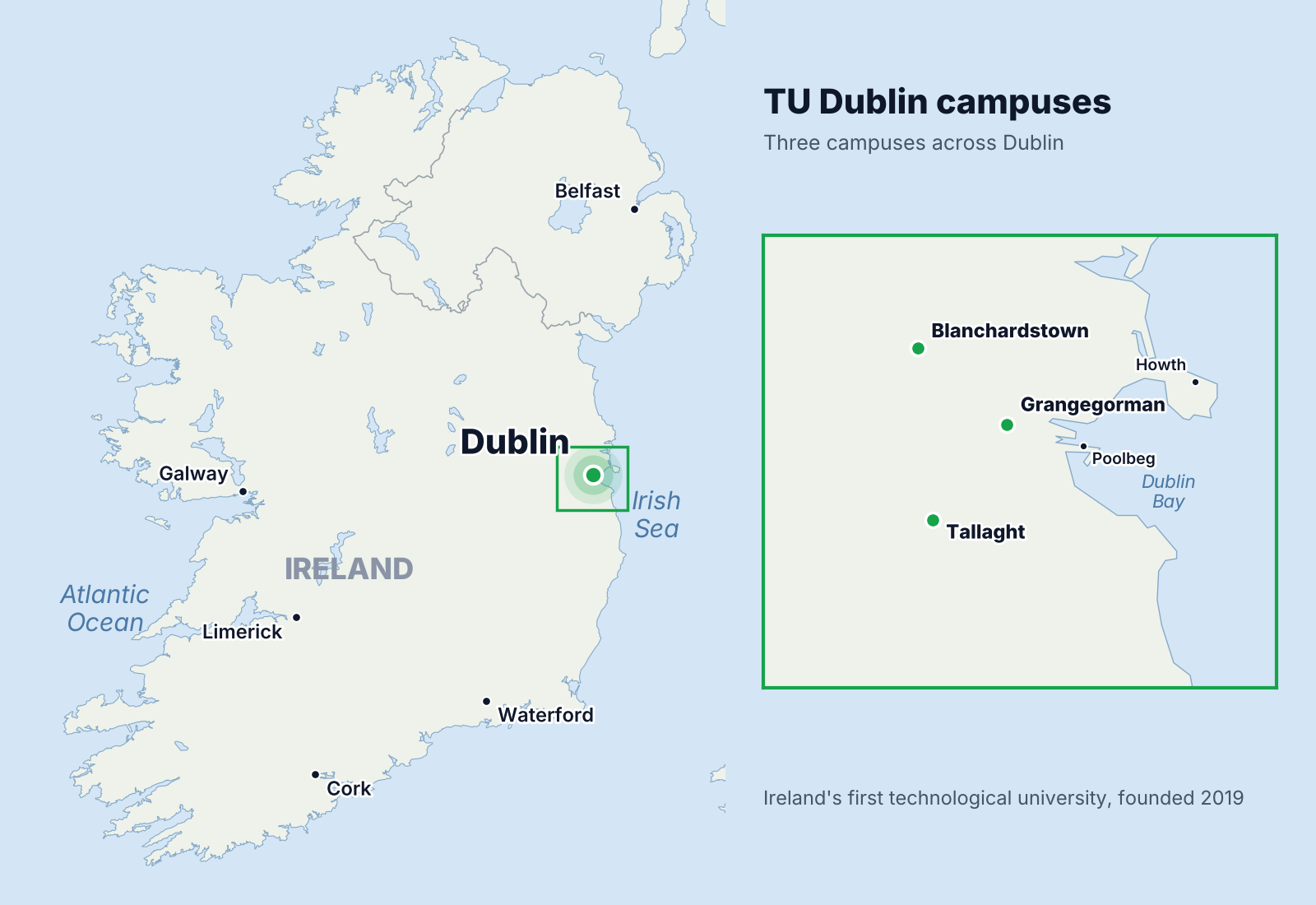
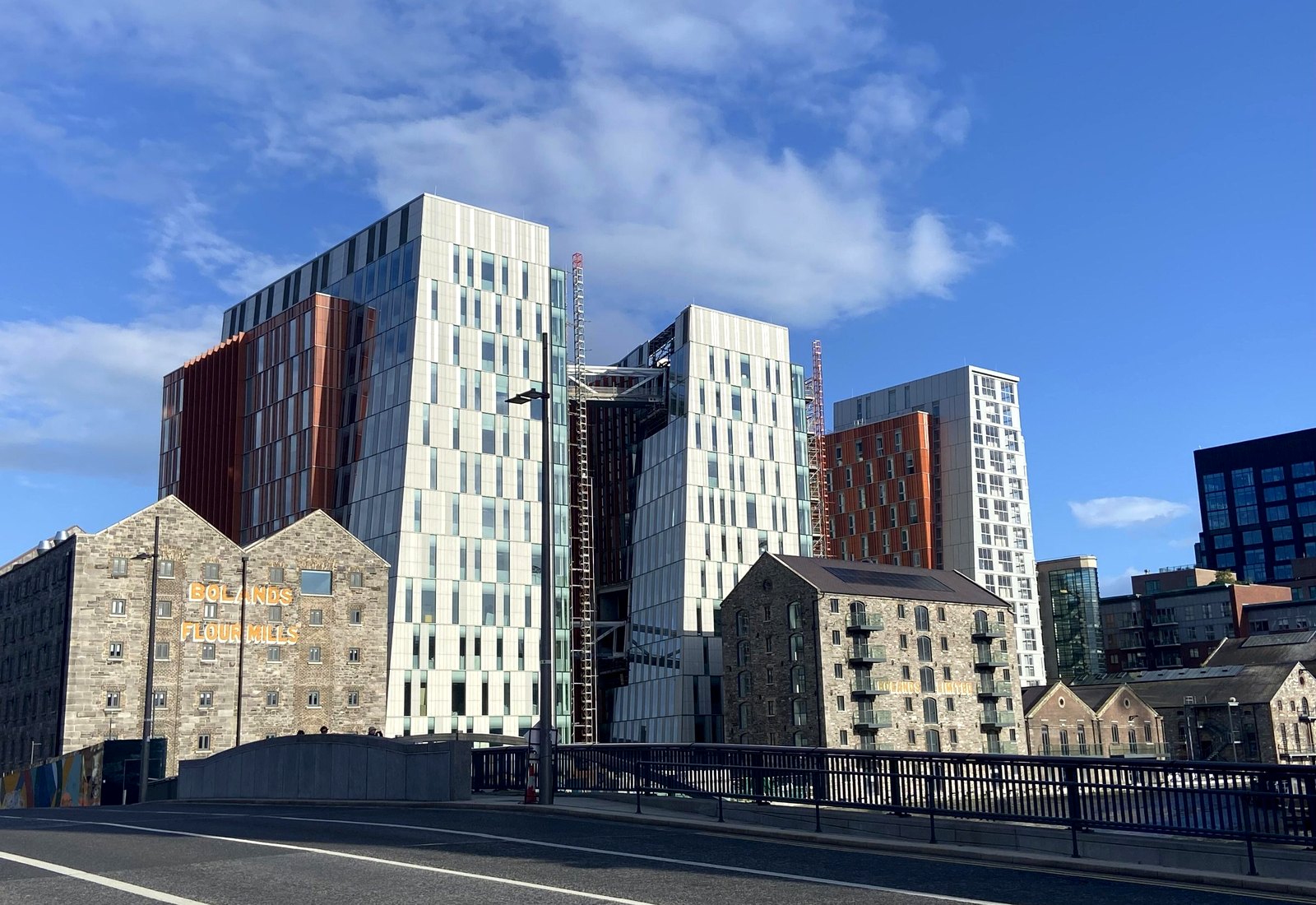
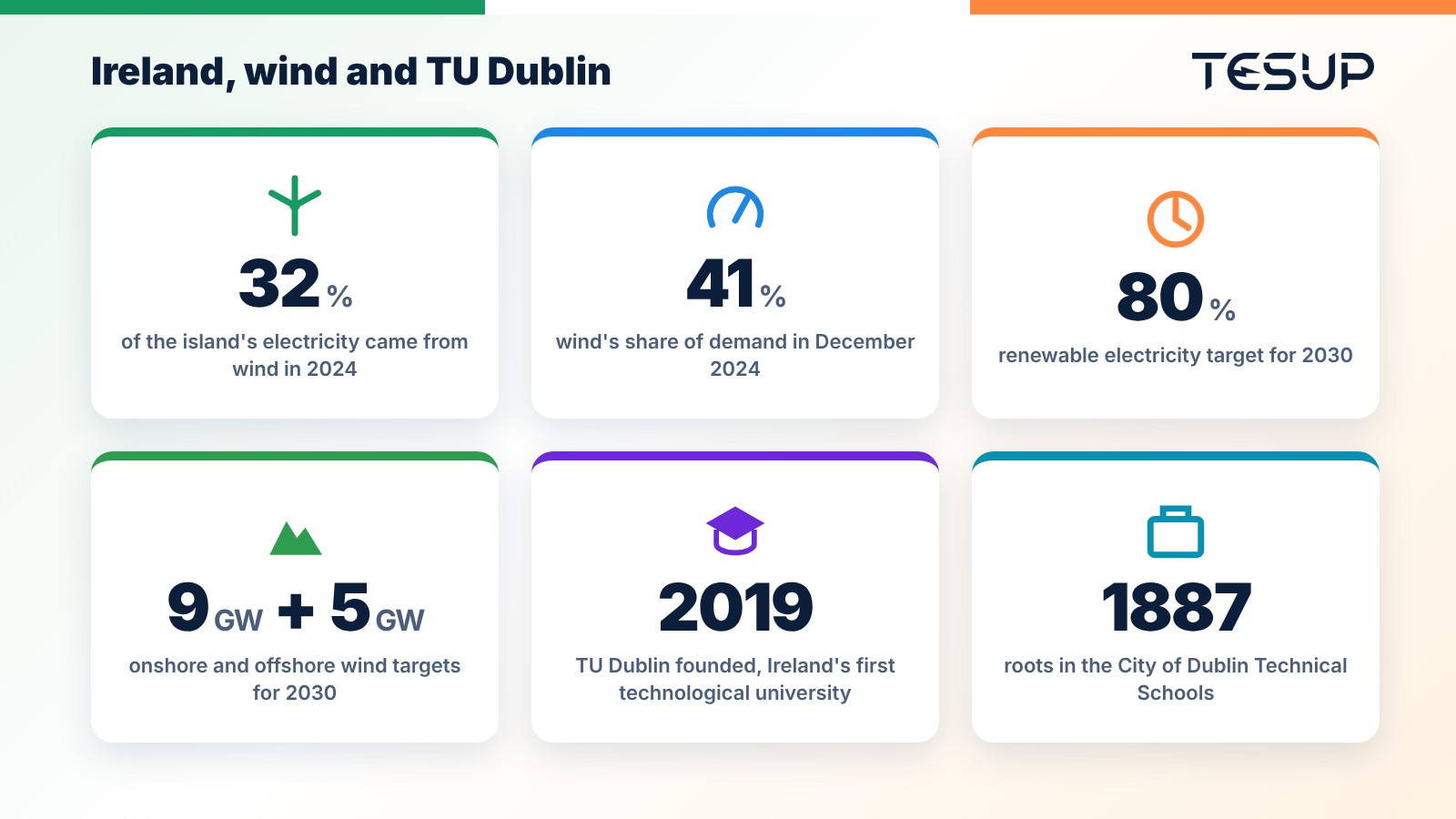
TU Dublin was created on 1 January 2019, when the Dublin Institute of Technology and the Institutes of Technology in Blanchardstown and Tallaght joined together to become Ireland's first technological university. Its roots go much further back, to the City of Dublin Technical Schools founded in 1887. Today around 28,500 students study there, from engineering and computing to business, media and culinary arts.
A bay full of wind
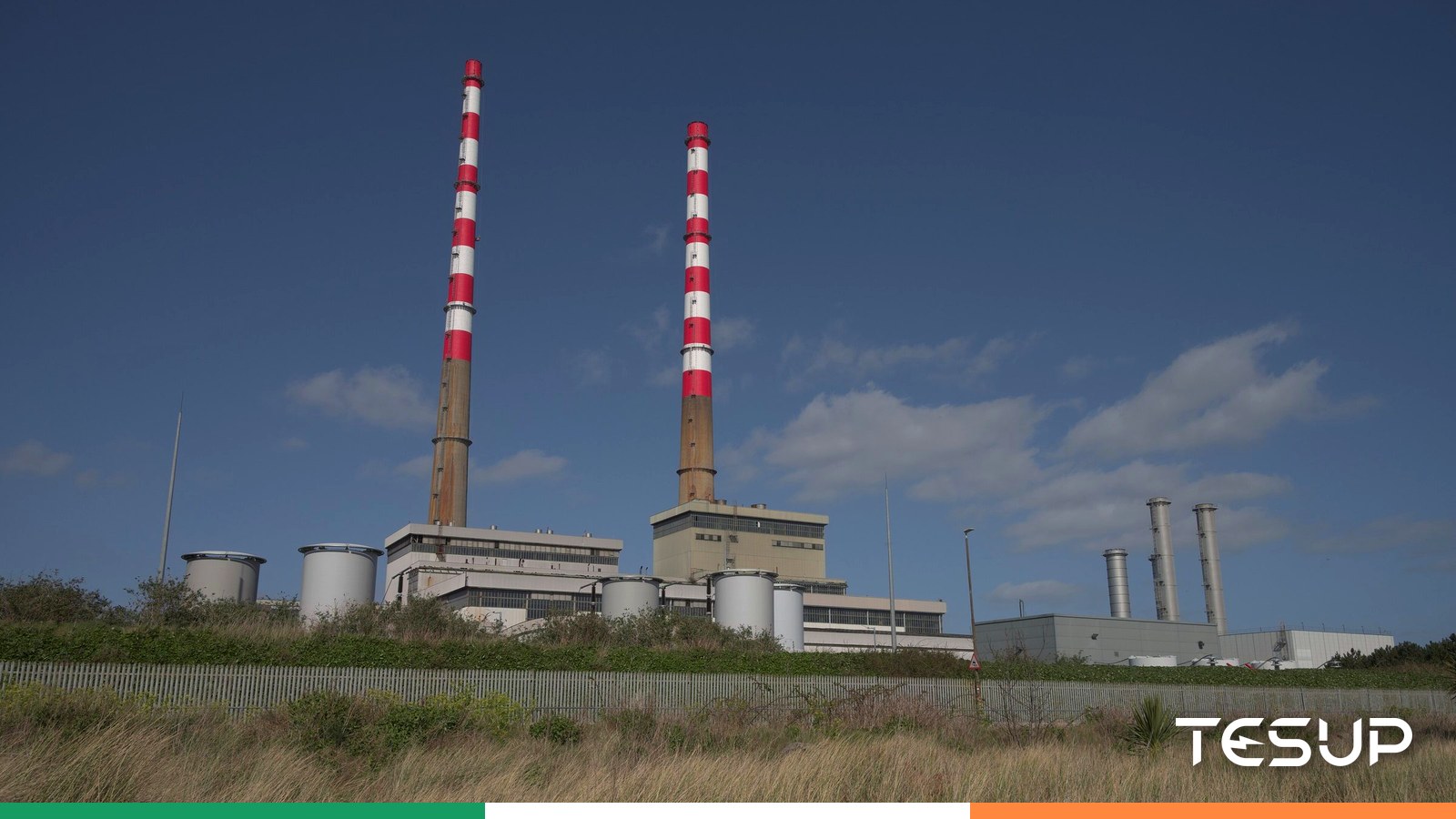
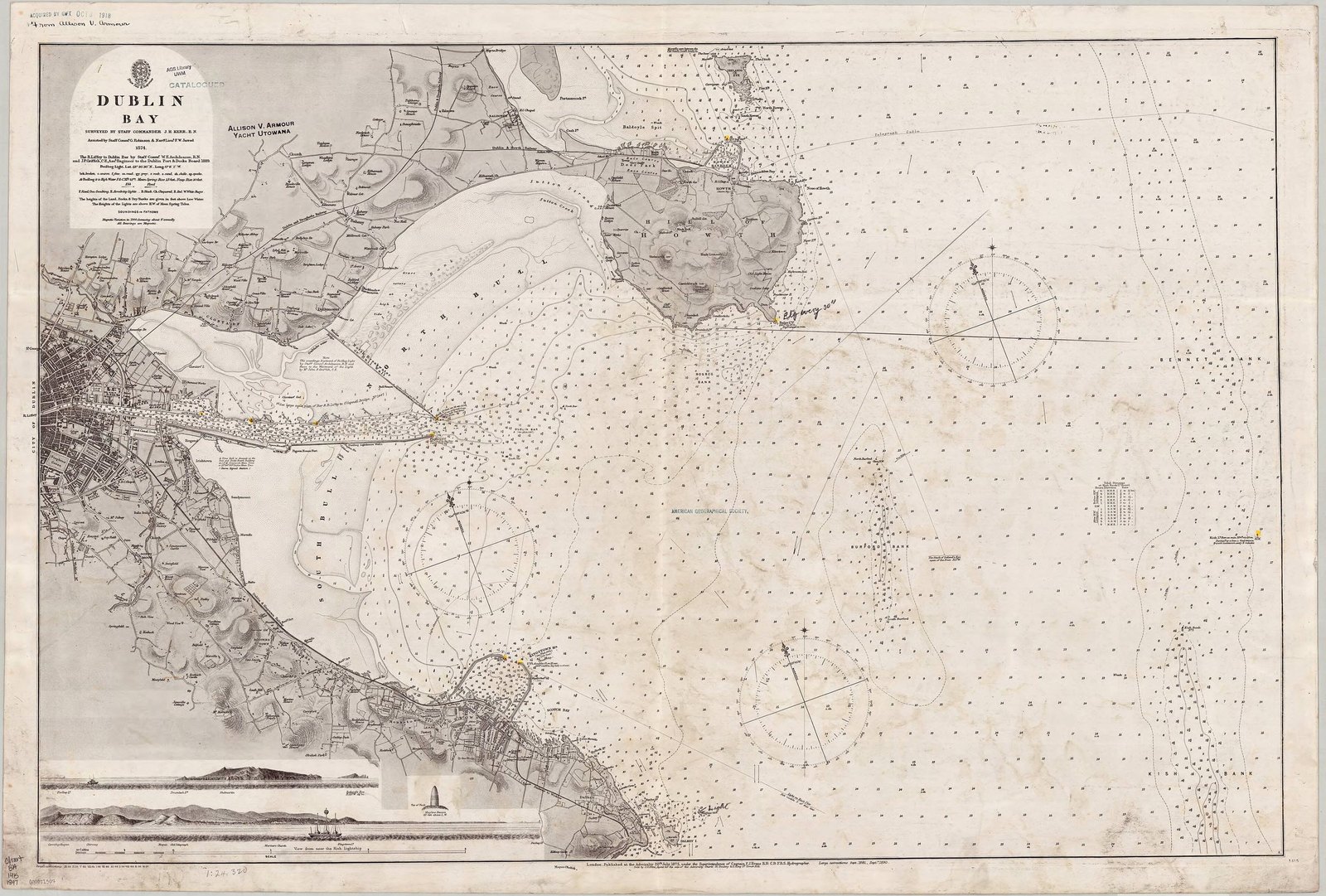
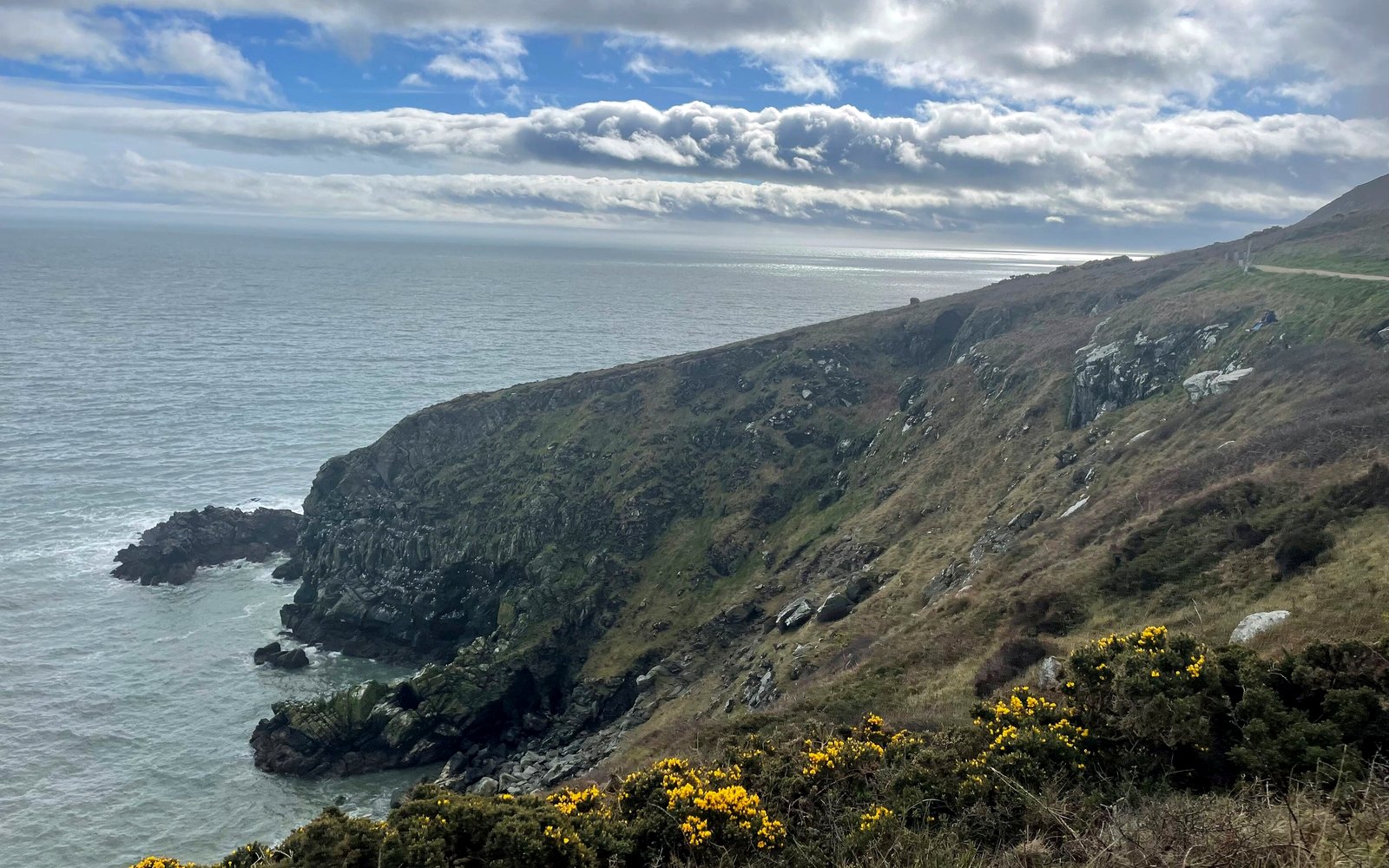
Dublin sits on a wide bay that opens straight onto the Irish Sea, between the cliffs of Howth Head to the north and Dalkey to the south. Above the south wall of the port stand the twin Poolbeg chimneys, about 207 metres tall, the highest structures in Dublin and a reminder of the power station that once fed the city. On a breezy day you can feel the wind come in off the water, and Ireland as a whole sits right in the path of the Atlantic westerlies.
A country that runs more and more on wind
Wind already supplies about a third of the electricity on the island of Ireland. In 2024 it covered 32 percent, and in December, when the Atlantic storms roll in, wind alone met 41 percent of demand. Ireland's Climate Action Plan aims for 80 percent renewable electricity by 2030, with 9 gigawatts of onshore wind and at least 5 gigawatts offshore. Big wind farms carry most of that load, but small turbines like Atlas show the same physics at a scale you can touch.
Why Atlas
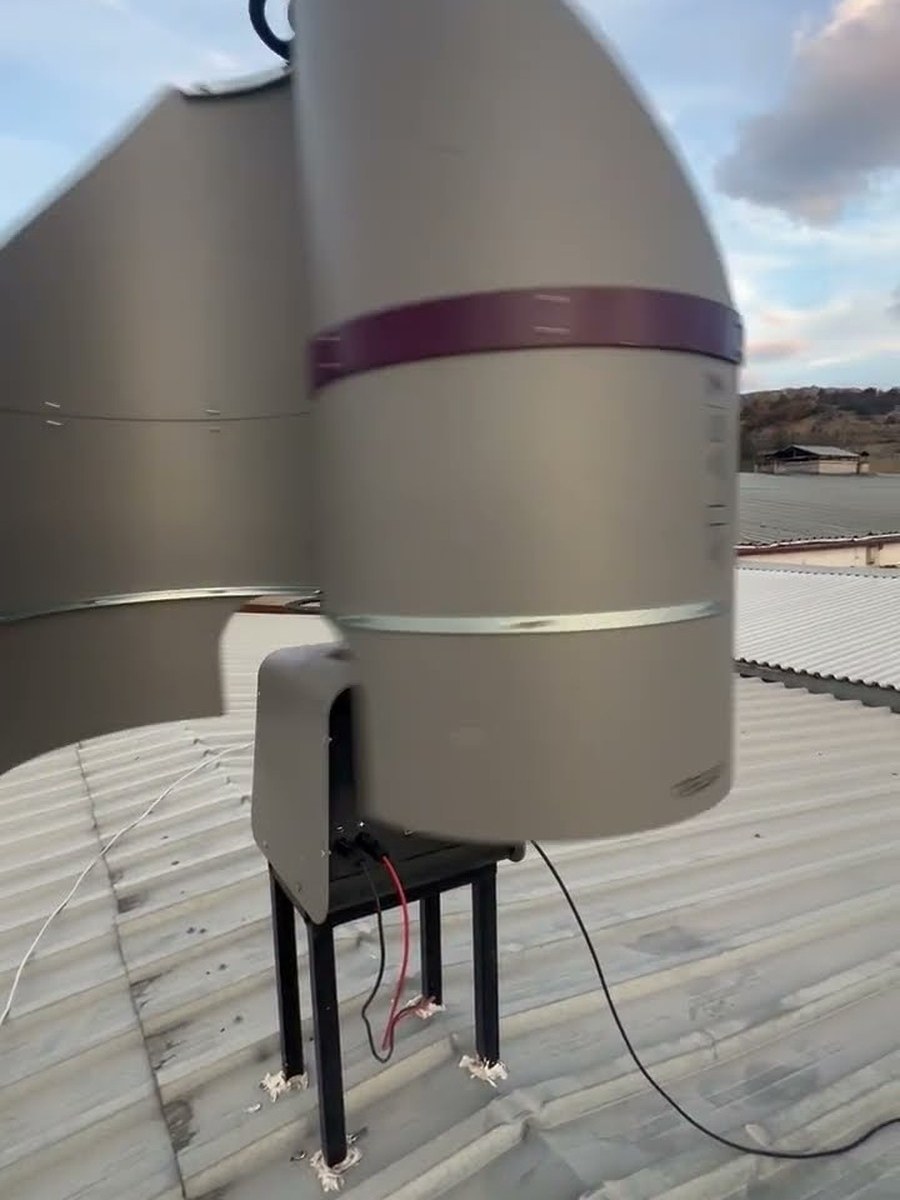
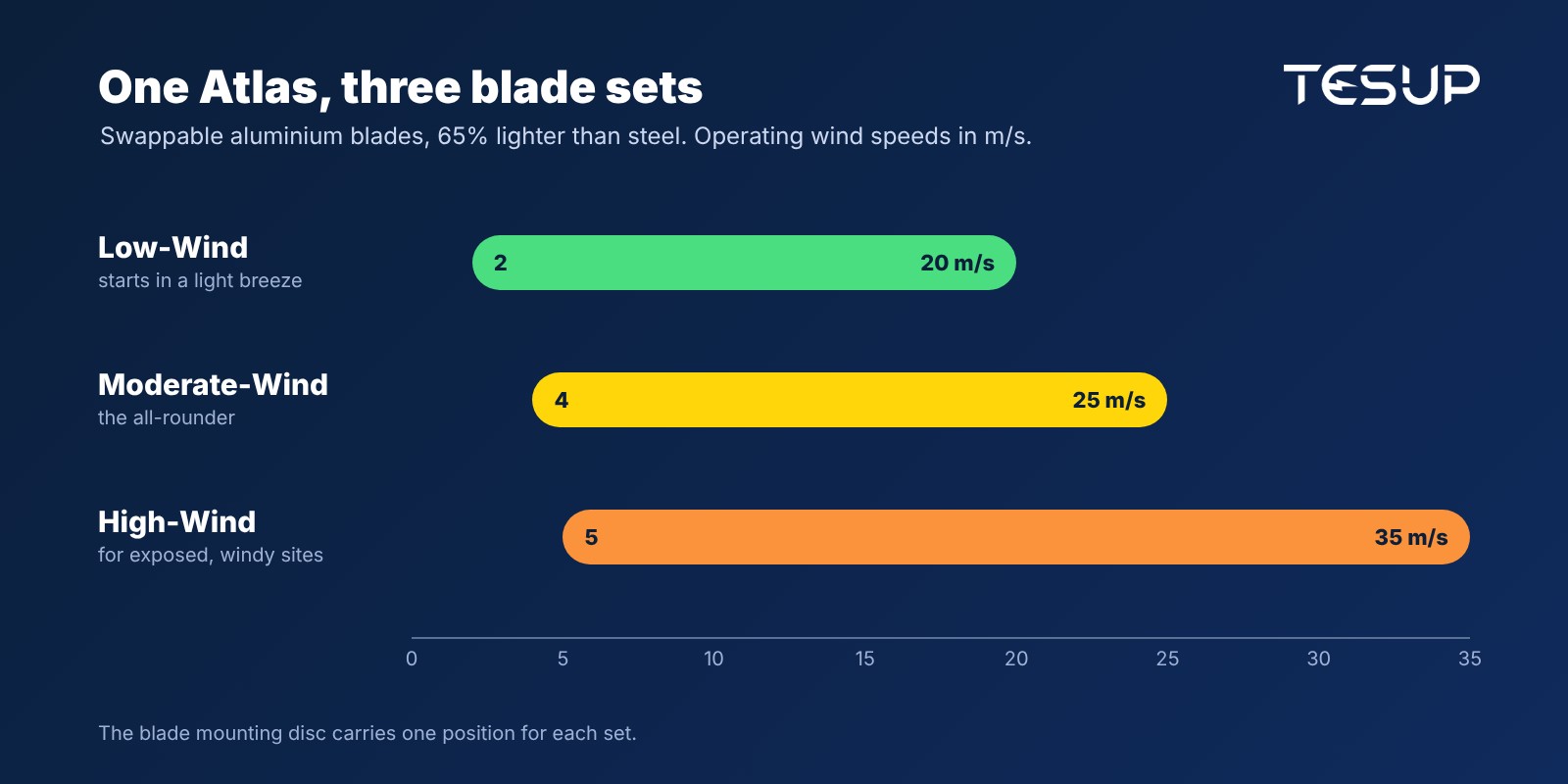
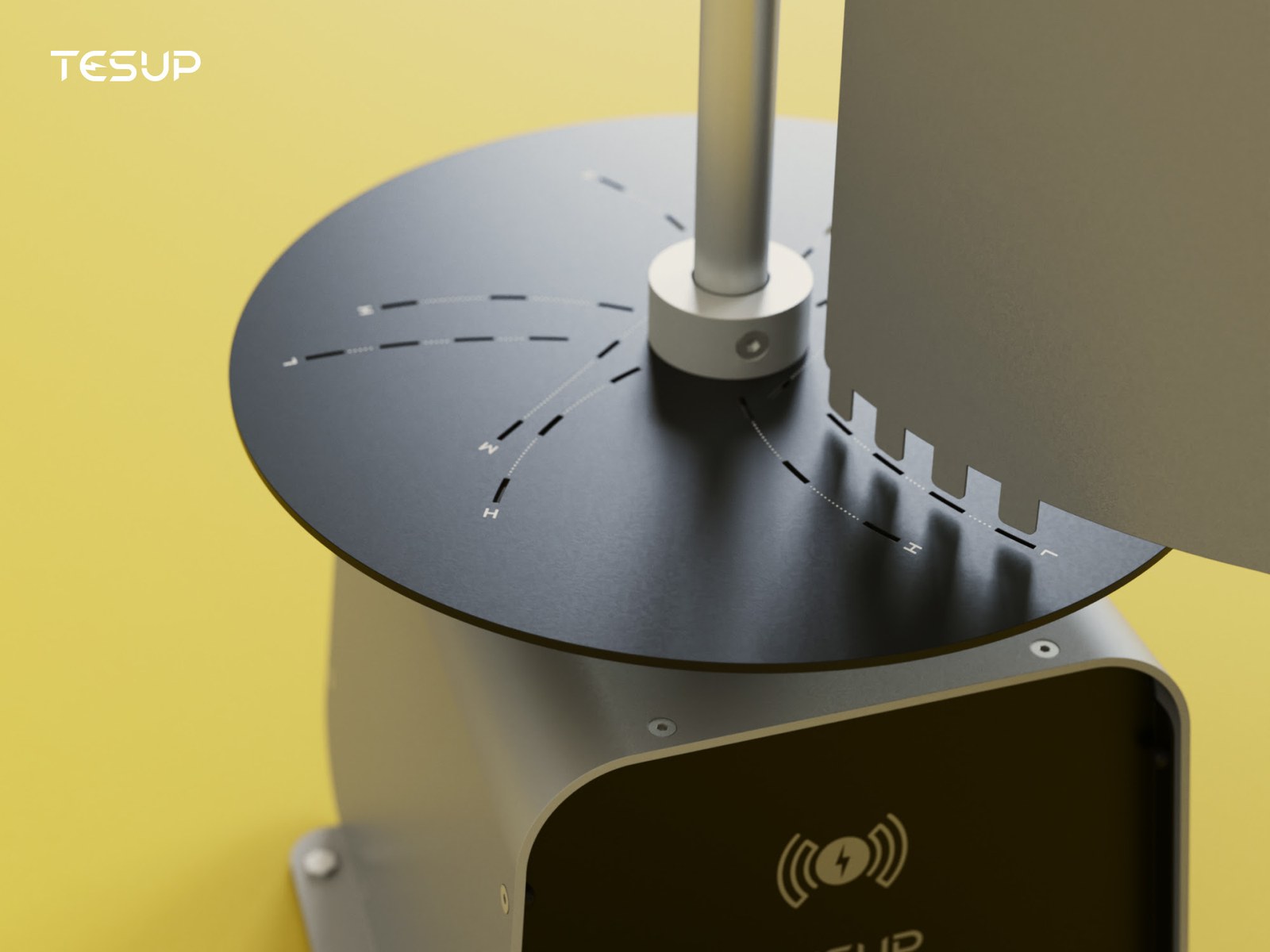
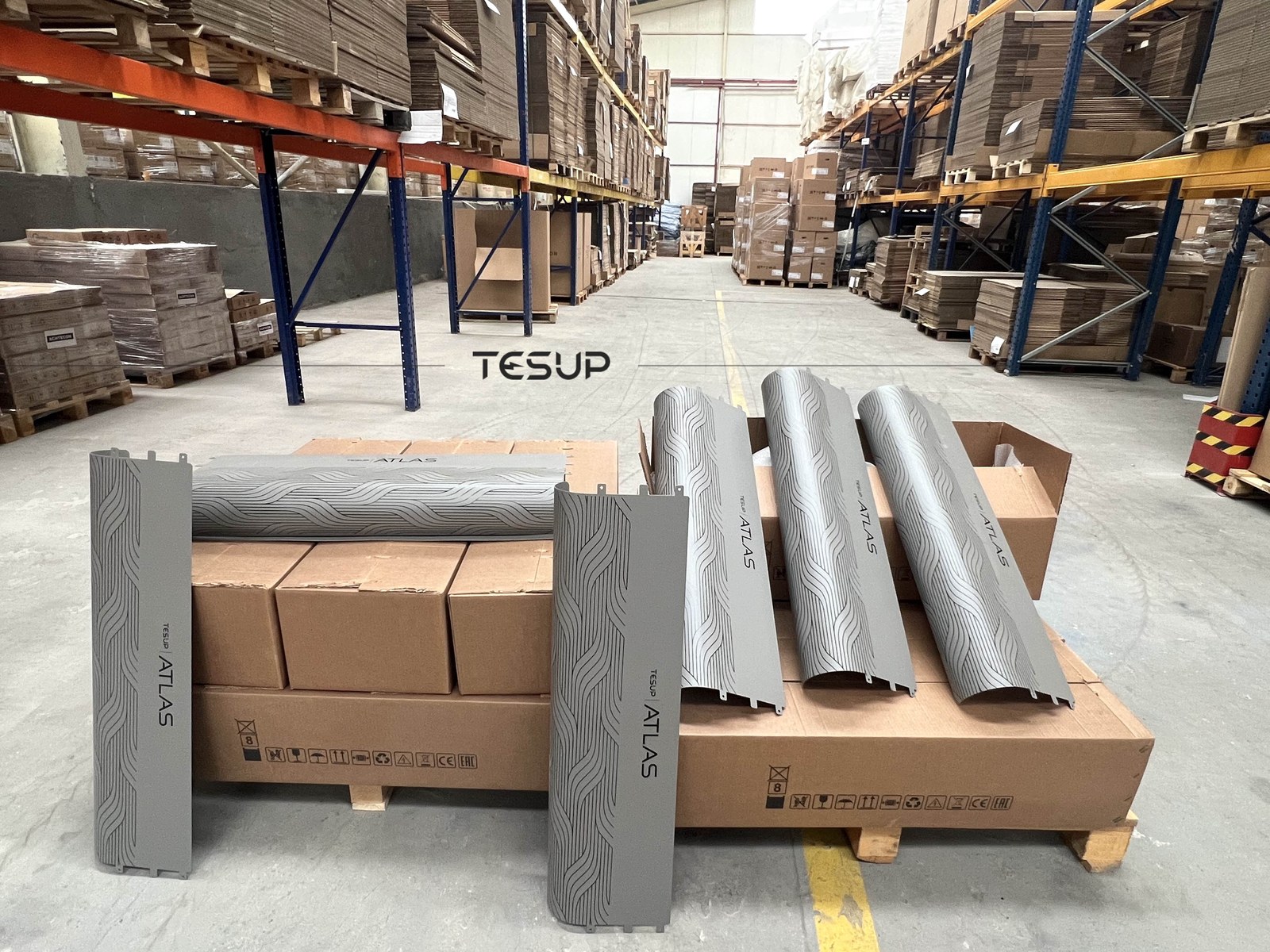
Atlas is our vertical-axis wind turbine. Because it turns around a vertical shaft, it catches wind from any direction without having to point into it, which suits cities, rooftops and gusty sites. Every Atlas can be fitted with one of three swappable aluminium blade sets: Low-Wind for 2 to 20 m/s, Moderate-Wind for 4 to 25 m/s and High-Wind for 5 to 35 m/s. The blades are 65 percent lighter than steel, so they react the moment the wind picks up. It is compact and easy to watch at work, which makes it a fine turbine for anyone who wants to understand wind power, not just use it.
From the bay to the campus
A small turbine is one of the best ways to make wind energy tangible: you can watch it start in a light breeze, measure its speed, its voltage and its output, and compare the numbers with the forecast. Whatever its new home on campus turns out to be, we are delighted that an Atlas is joining a university with more than a century of technical education behind it. Go raibh maith agat, TU Dublin.
Sources: Technological University Dublin; Higher Education Authority, TU Dublin profile; Wind Energy Ireland, annual report 2024; EirGrid, system data December 2024; Government of Ireland, Climate Action Plan 2025 (IEA summary); Wikipedia, Poolbeg Generating Station and Ha'penny Bridge. Images via Wikimedia Commons, public domain or CC0 as credited; Atlas photographs: TESUP.
Wind from every direction
Atlas is our vertical wind turbine for homes, rooftops, farms and campuses, with three swappable aluminium blade sets so you can match it to your wind.
Discover Atlas