

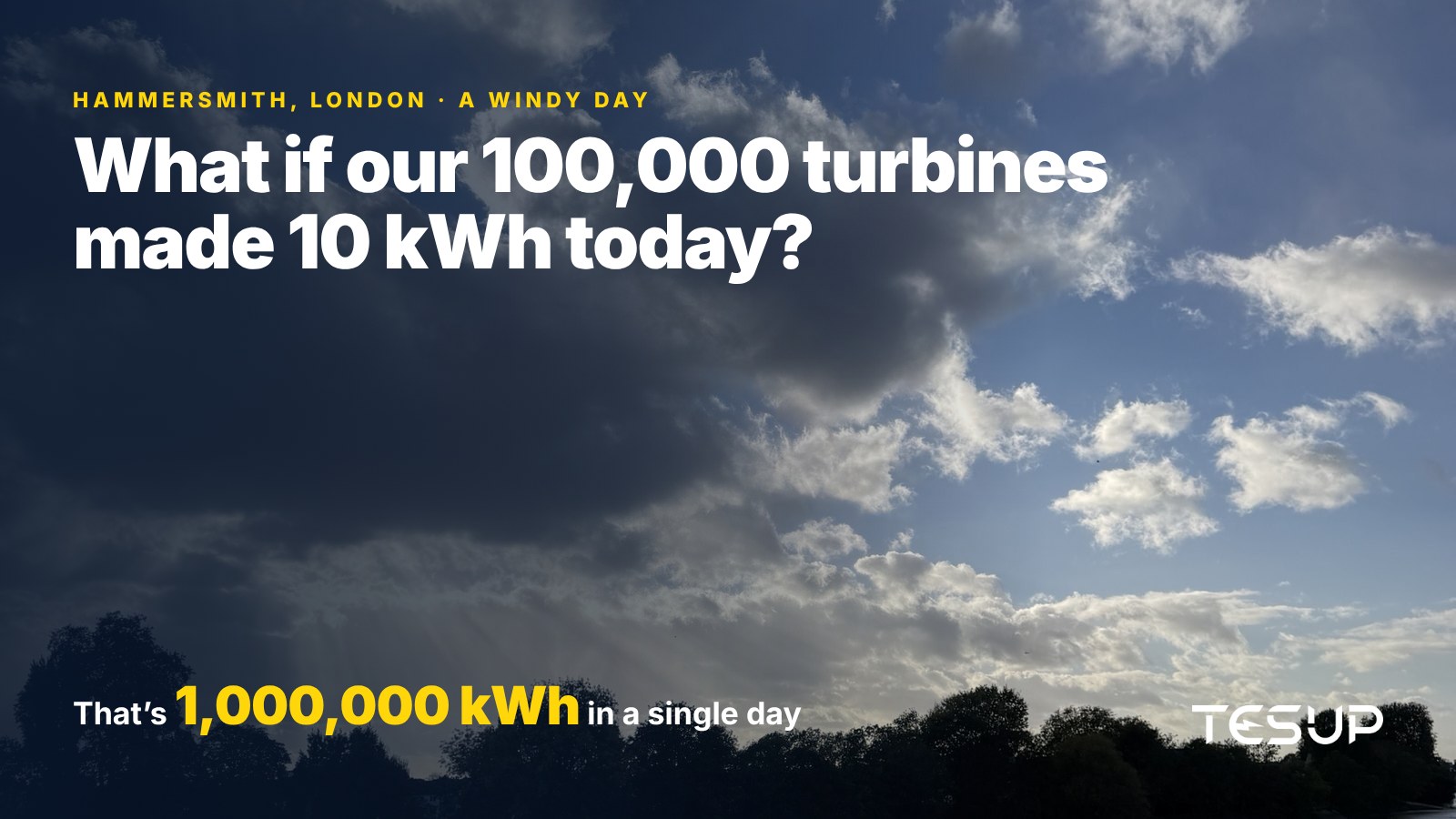
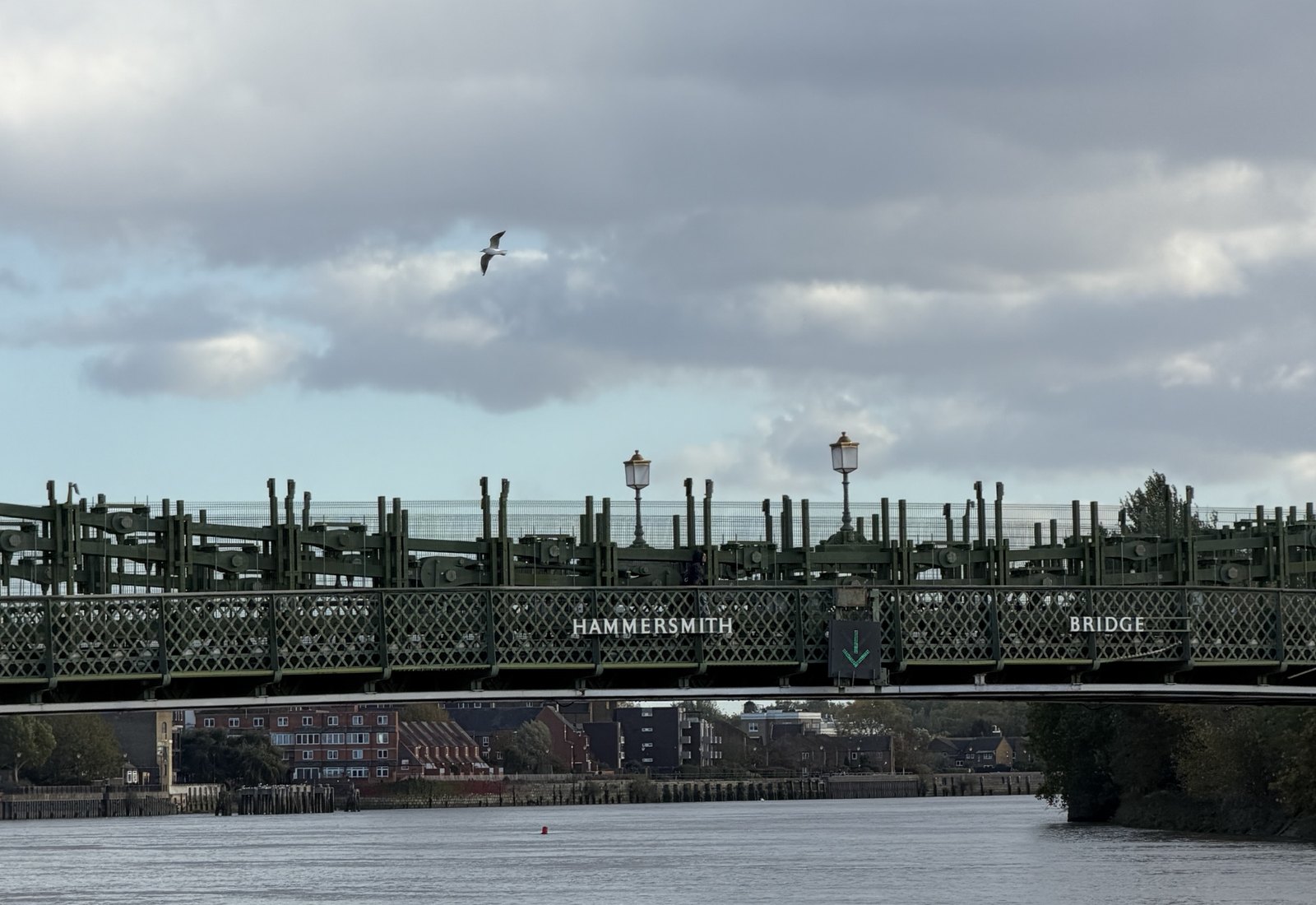
A breezy October afternoon on the Thames at Hammersmith. The clouds are racing, the gulls are hanging in the air and the planes are lining up for Heathrow. It is the kind of day a wind turbine loves, so we did a little sum.
A windy day on the river
Walk along the river at Hammersmith on a day like this and you can feel the wind pushing up the Thames. The water is choppy, the light keeps changing and the trees on the far bank bend and settle, bend and settle. Every gust is energy that a turbine could turn into electricity.
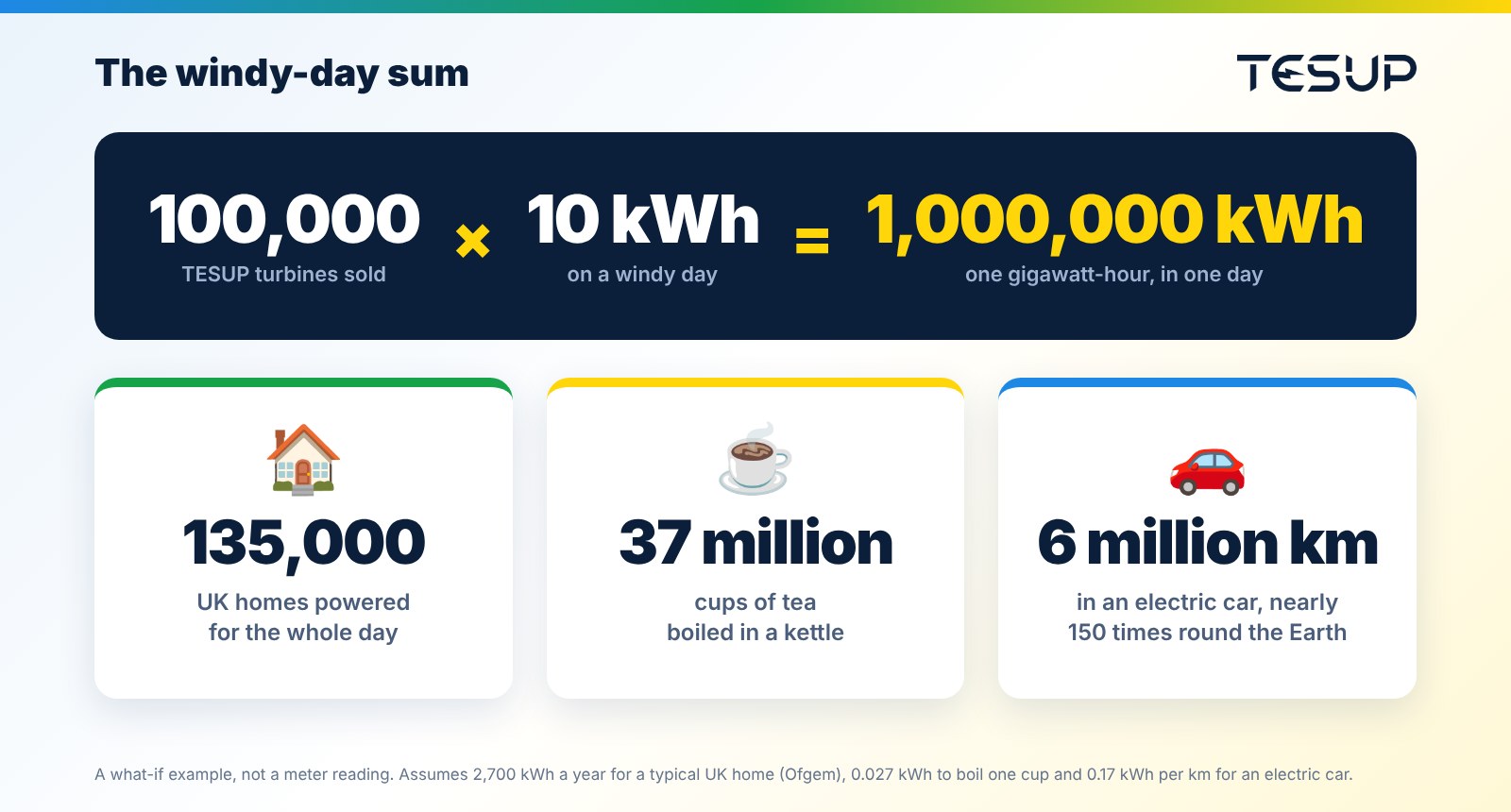
The windy-day sum
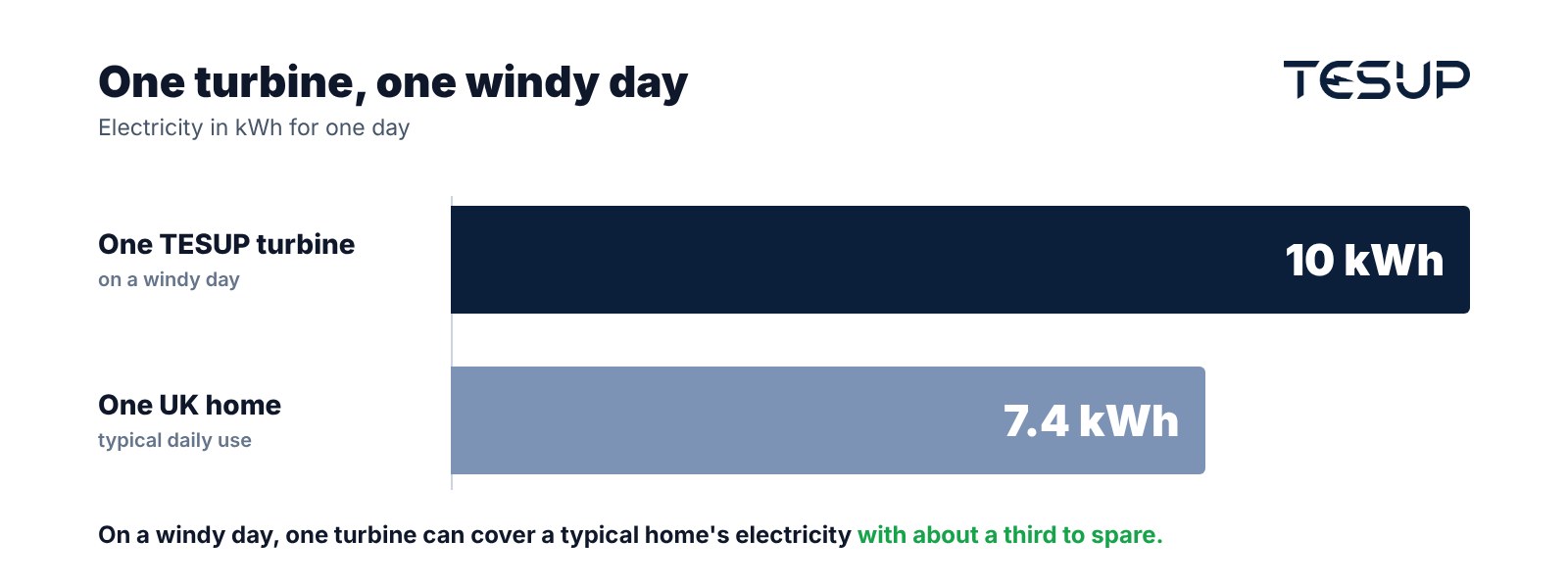
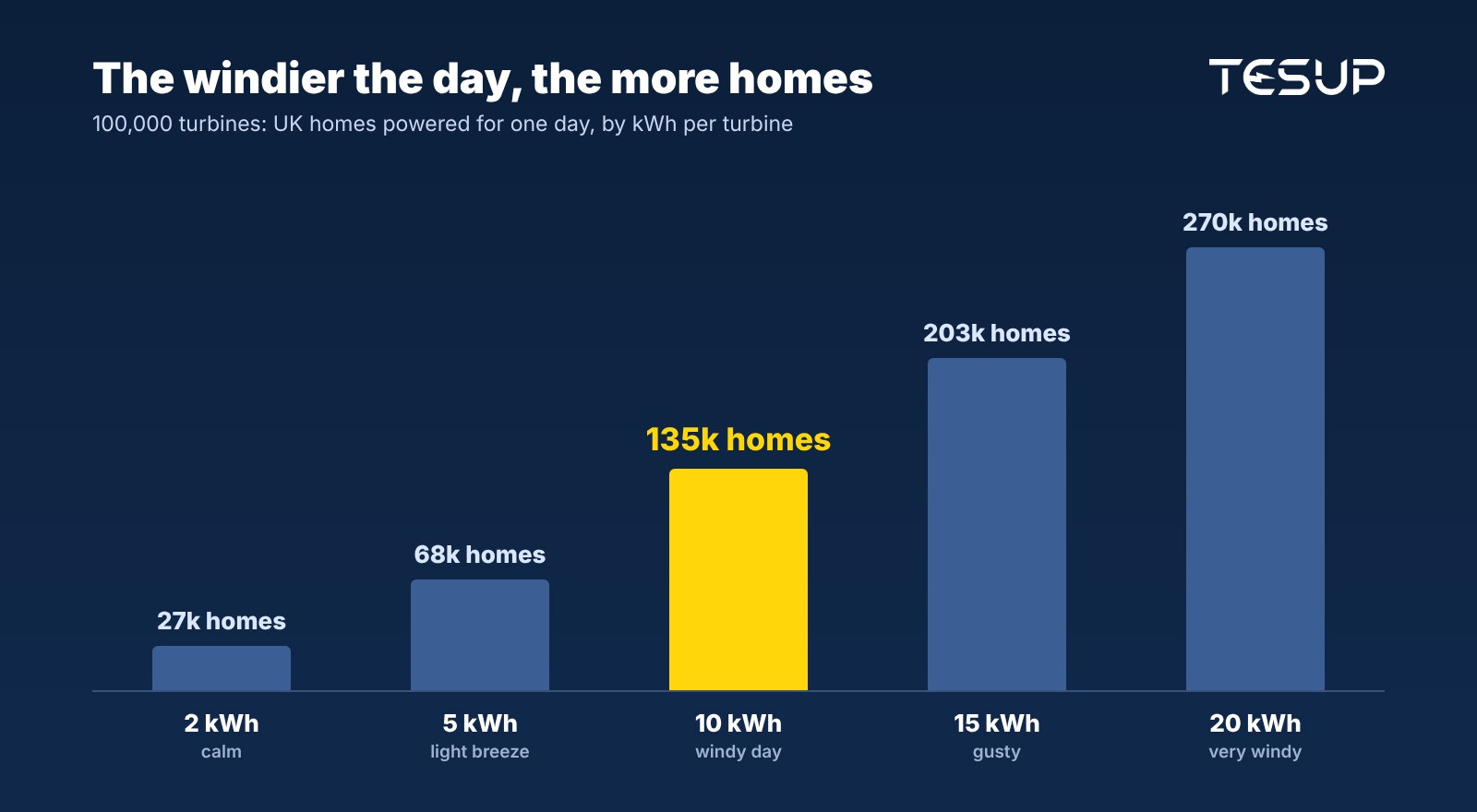
More than 100,000 TESUP wind turbines have been sold around the world. Imagine each of them making 10 kWh today. That is 1,000,000 kWh, a full gigawatt-hour, in a single day.
What a gigawatt-hour looks like
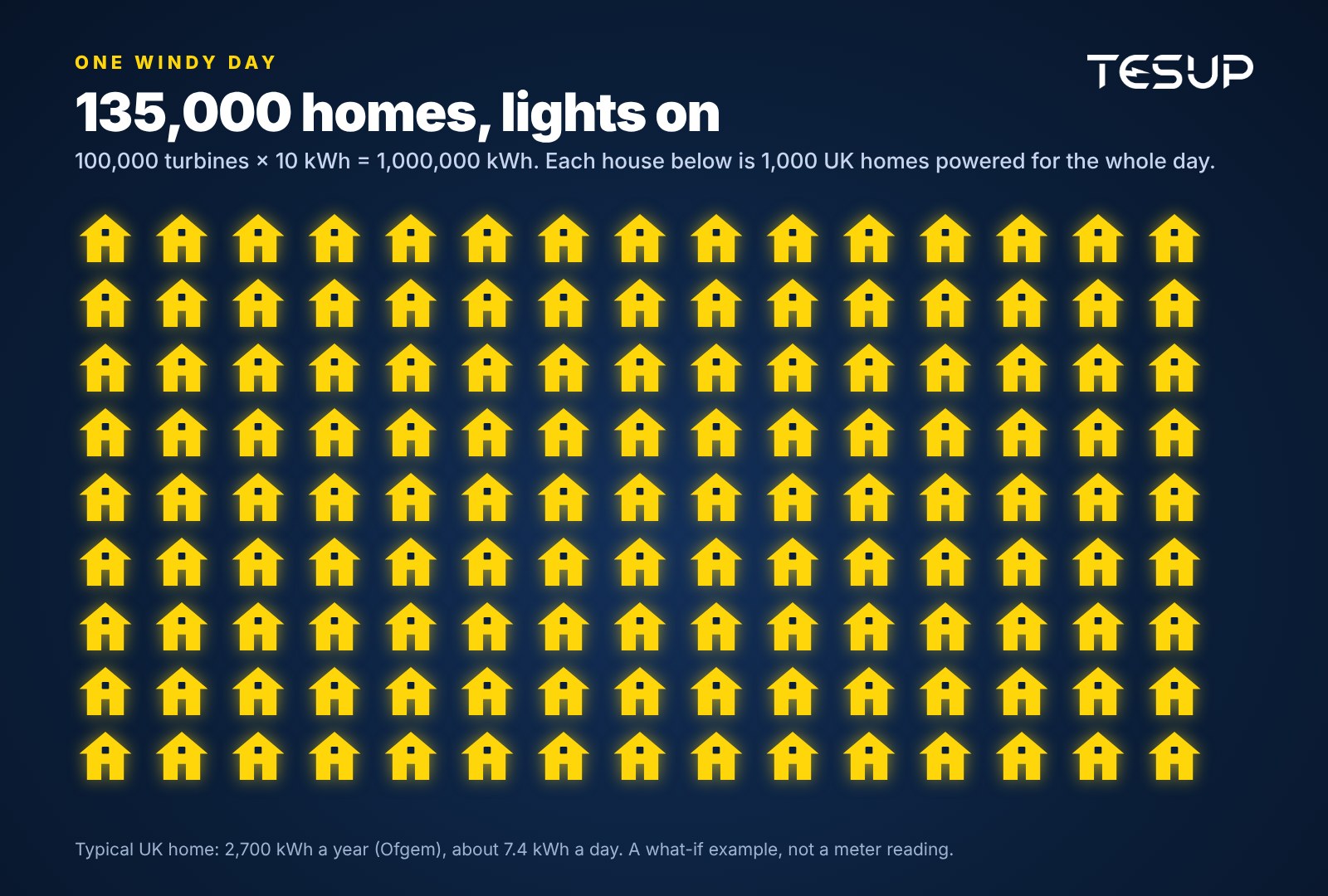
A typical UK home uses about 2,700 kWh of electricity a year, or roughly 7.4 kWh a day. So 1,000,000 kWh would cover around 135,000 homes for the whole day. Or boil about 37 million cups of tea. Or drive an electric car around 6 million km, nearly 150 times round the Earth.
Is 10 kWh a day realistic?
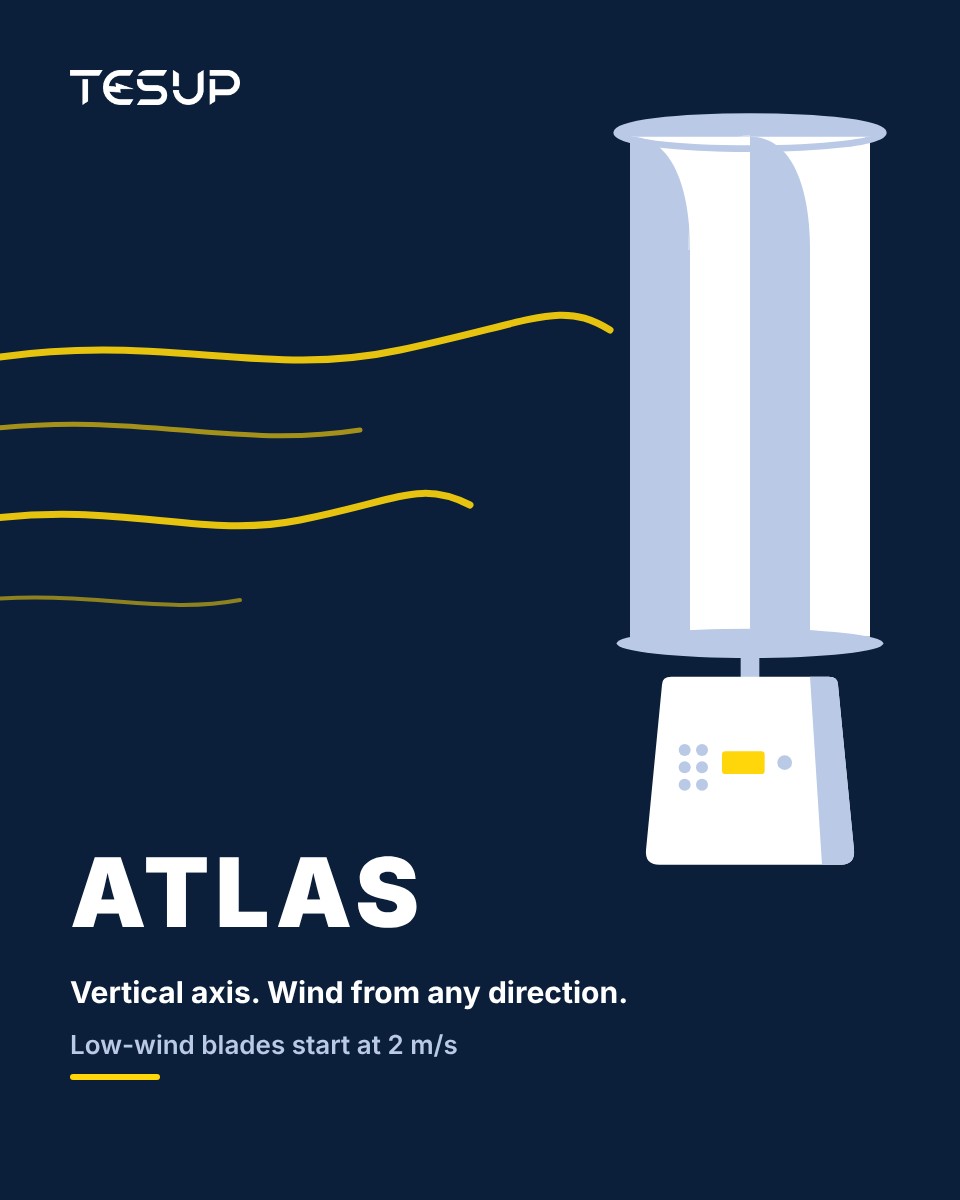
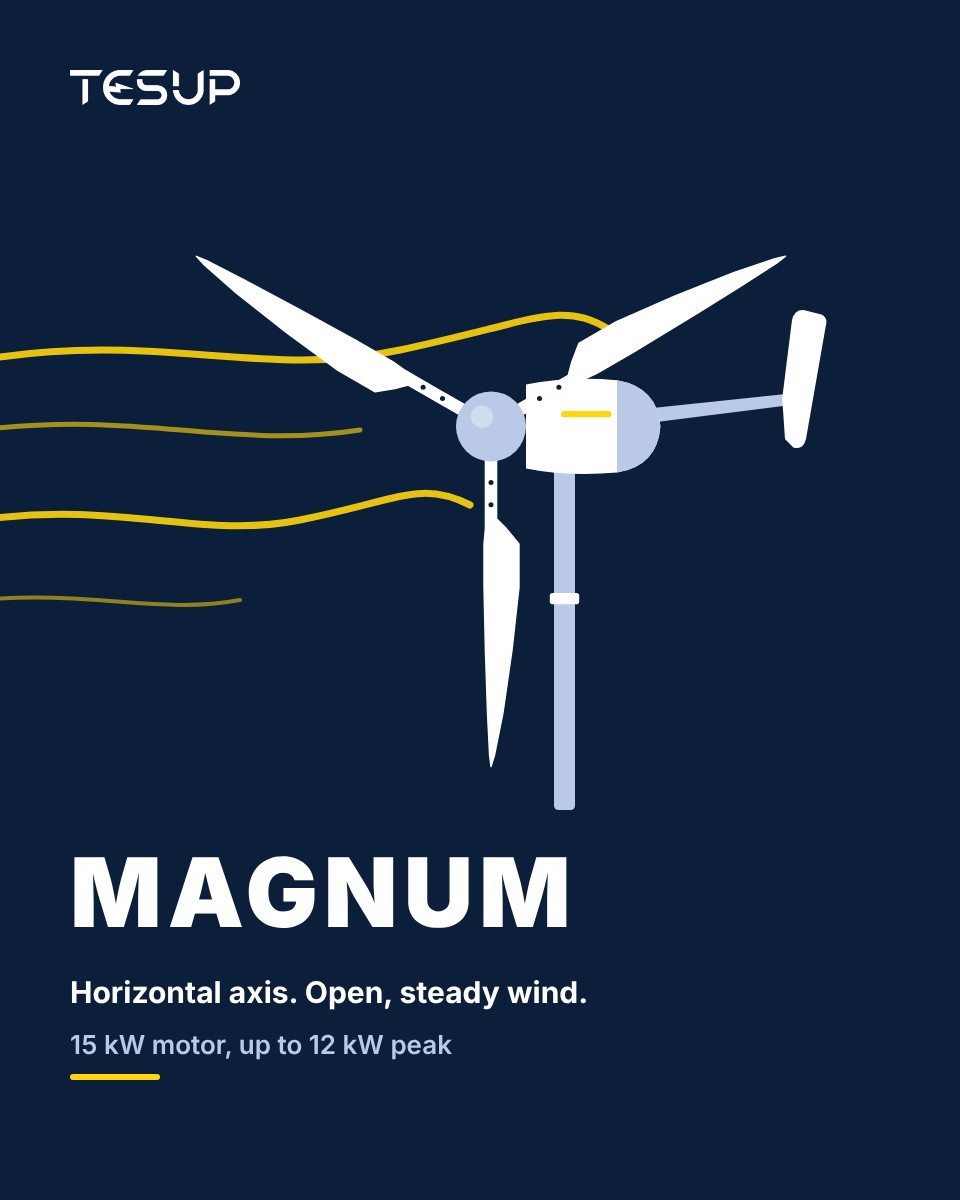
Ten kWh in a day means an average of about 420 W, around the clock. On a gusty day that is within reach of an Atlas or a Magnum, but the wind is never the same everywhere, and real output depends on the site, the height, the turbine and the blade set. So treat this as a what-if, not a meter reading. On calmer days the numbers are smaller, which is exactly why Atlas has a low-wind blade set that starts turning at just 2 m/s.
Hammersmith Bridge
The green suspension bridge in these photos opened in 1887. It was designed by Sir Joseph Bazalgette, the engineer behind London's Victorian sewers, and it replaced the first Hammersmith Bridge of 1827, the first suspension bridge across the Thames. Every spring the Boat Race between Oxford and Cambridge passes underneath it.
The planes tell you the wind
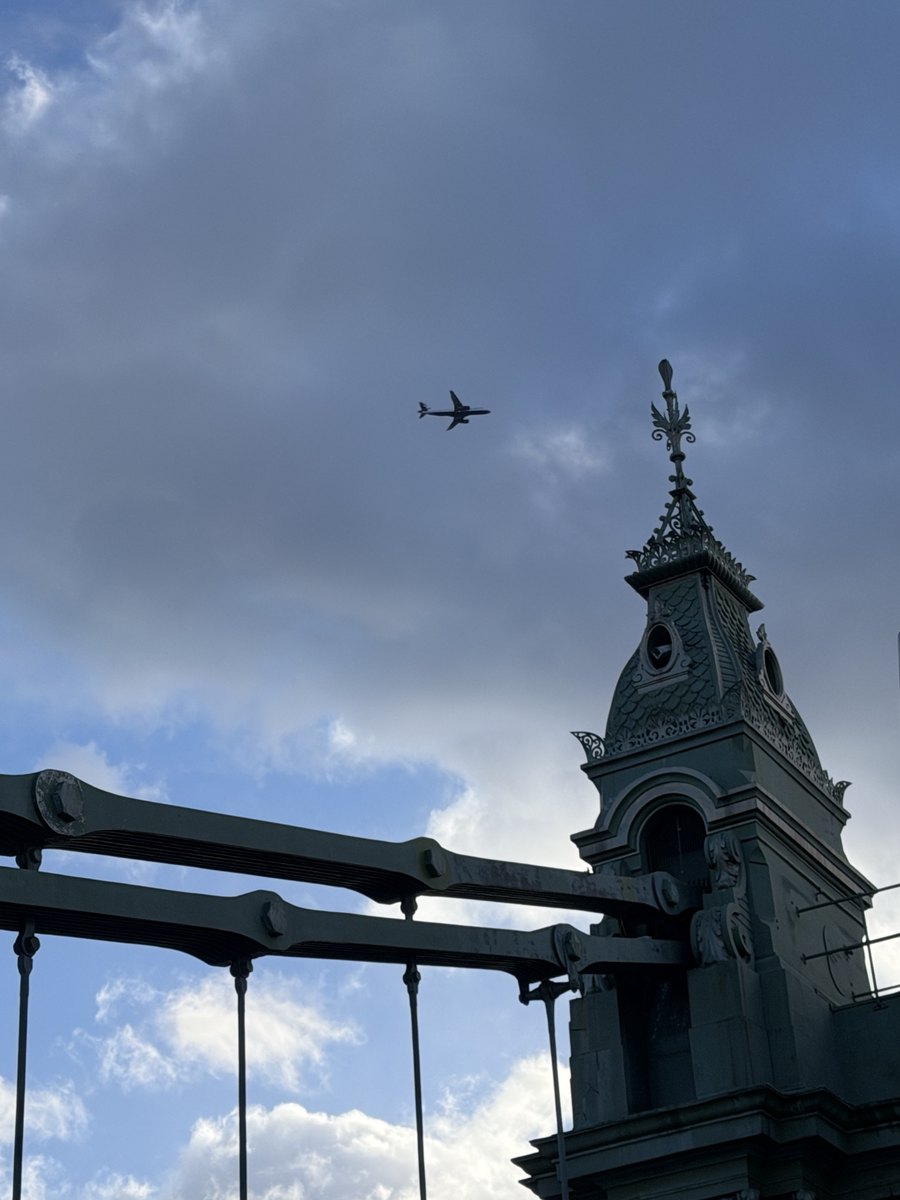
Planes land into the wind. When the wind blows from the west, as it does in London for much of the year, aircraft heading for Heathrow come in over the city from the east, right across the river at Hammersmith. So when you see them lined up overhead, there is a westerly breeze, and somewhere a turbine is turning.
Your share of the wind
If you have a roof, a garden or a field that catches the breeze, you could be part of the next windy-day sum. Pick the turbine that suits your wind and let the gusts do the work.
Sources: Ofgem, typical domestic consumption values; Heathrow Airport, runway operations; Wikipedia, Hammersmith Bridge. The windy-day sum is an illustration, not measured output. Photographs: TESUP, Hammersmith, October 2026.
Find your turbine
Atlas catches wind from any direction, Magnum makes the most of open, steady wind. Both are household wind turbines, assembled and tested in our own workshops.
Discover AtlasDiscover Magnum