

Most of what a wind turbine costs is not design or assembly. It is metal — copper for the windings, laminated steel for the stator, neodymium for the magnets, sheet steel for the housing. Which means the single biggest decision affecting the price on our website is not made in the workshop. It is made at the purchasing desk, months earlier.
Inside the factory
From raw copper to finished turbine — 100% in-house.
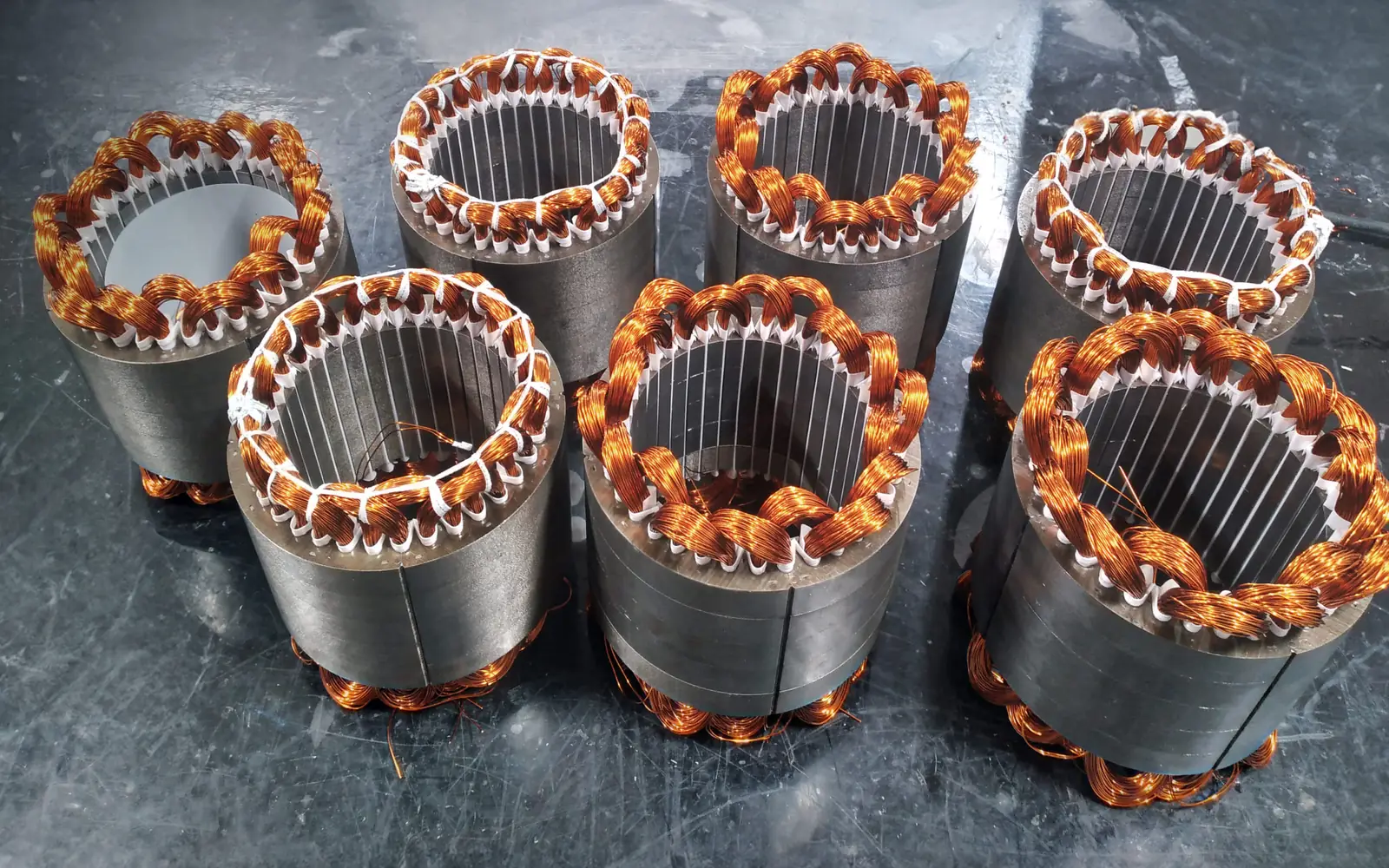
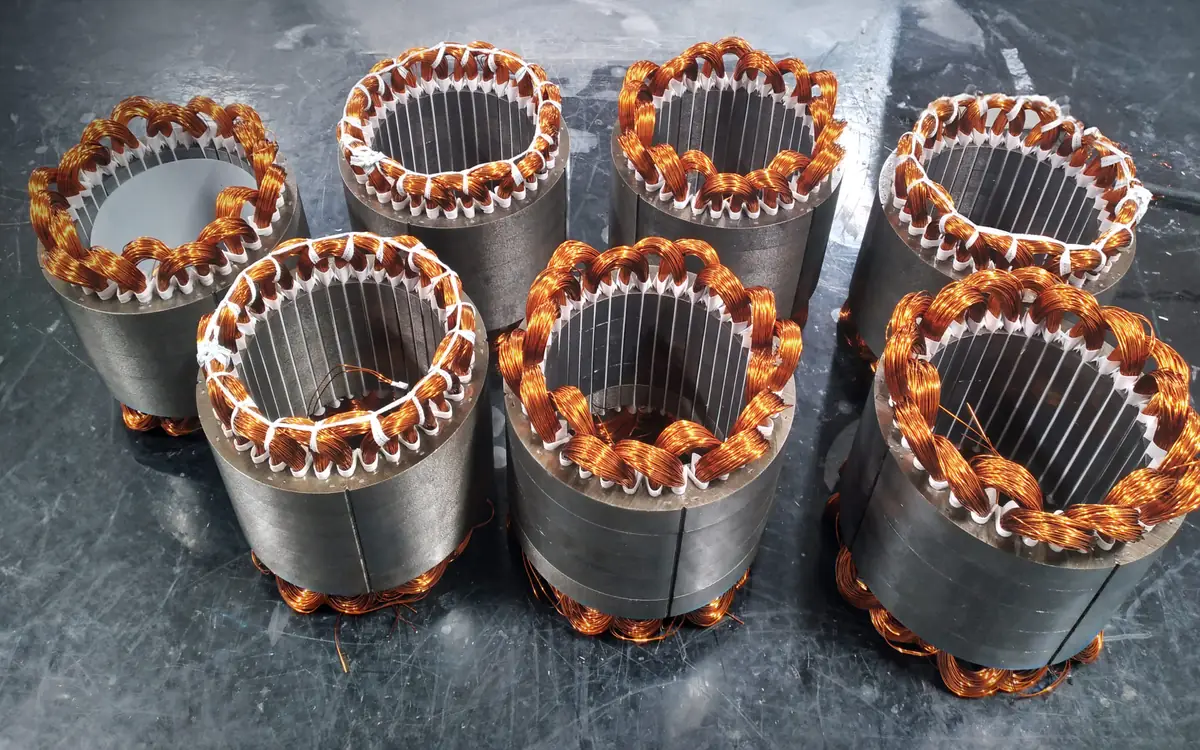
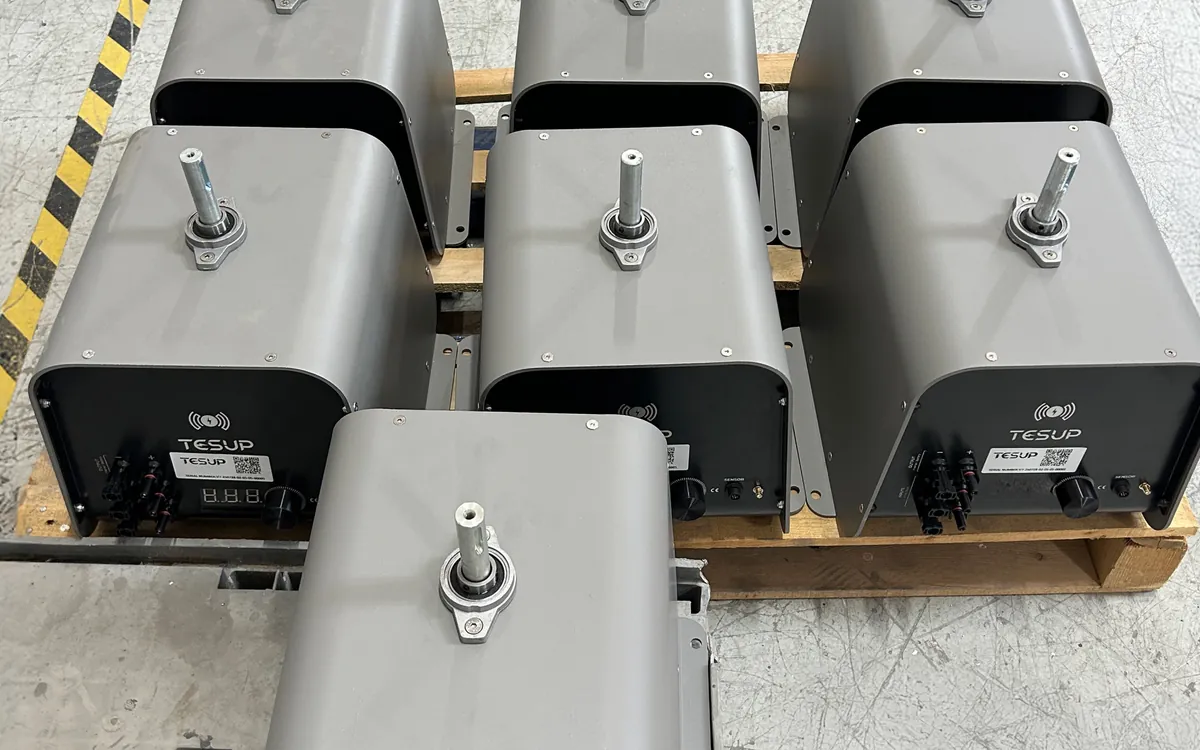
The copper stator on the left becomes the finished Atlas on the right — photographed on the same floor, the same week. Drag to see it happen.
 Before
After
Before
After
We buy metal by the tonne, not by the unit
Copper wire, electrical steel, magnets and housing steel are purchased as bulk commodity orders covering a full production run — not topped up batch by batch as turbines are built.
The difference this makes is larger than most people expect. A small manufacturer buying a reel of copper at a time pays the small-order price, and pays it again on every unit it builds. That premium is baked into the cost of each turbine, permanently. Order the run's copper in one purchase and the premium disappears from every machine that comes off the line — the same metal, the same specification, at commodity pricing rather than retail.
Bulk buying also removes something less obvious: uncertainty. When the material for a production run is already secured, a spike in the copper market does not become a sudden price rise on the website halfway through the year.
Scale compounds, so we made it compound on purpose
The same Atlas generator ships to Ireland, Japan, Brazil, Türkiye and dozens of countries in between. One design, one production line, one spare-parts inventory.
That is a deliberate choice, and it feeds itself. Selling one design everywhere creates the volume that justifies buying metal by the tonne — and buying by the tonne is what keeps the price low enough to sell in that many markets. Manufacturers who build a different variant for each region never reach the volume where either half of that loop starts working.
Nothing sits between our factory and your door
A turbine that reaches a customer through an importer, a wholesaler and a retailer carries three margins by the time it arrives. Ours goes from our factory to our own storefront to your address. That is not clever engineering — it is simply a shorter chain, and every link removed is a cost the customer never pays.
Where the saving does not go
Buying well is only worth it if the savings are not immediately spent cutting corners. Two specifics:
Solid copper windings. The cheap substitute across the small-generator industry is copper-clad aluminium — aluminium wire with a thin copper skin. It weighs less and costs less, and it carries roughly 60% of copper's conductivity, so it runs hotter for the same output and ages faster. We use solid copper. It is invisible in a product photo, which is exactly why it is worth stating.
No gearbox. A 24-pole permanent magnet generator produces usable electricity at low rotational speed, so there is no gearbox between rotor and generator. That removes the component most likely to fail on a small turbine, along with its oil changes and its noise.
Why any of this matters beyond our price list
Renewable energy has a distribution problem more than a technology problem. The engineering to generate power from moderate wind has existed for decades. What has been missing is a machine at a price an ordinary household can reach, in enough markets at once to matter.
Economies of scale are usually discussed as a way for a company to protect its margin. Applied deliberately, they are also the mechanism that moves a technology from a small number of wealthy roofs to a large number of ordinary ones — and small, distributed generation reaches houses that a grid extension never will.
That is the whole strategy, and there is nothing mysterious about it. Buy the metal properly. Build one design for everywhere. Sell it directly. Do not cheapen the parts that decide how well it works.
The slider above shows both ends of the process — a copper stator, and the finished Atlas generator. Both photographed on our own factory floor in Slovakia, one week apart.