

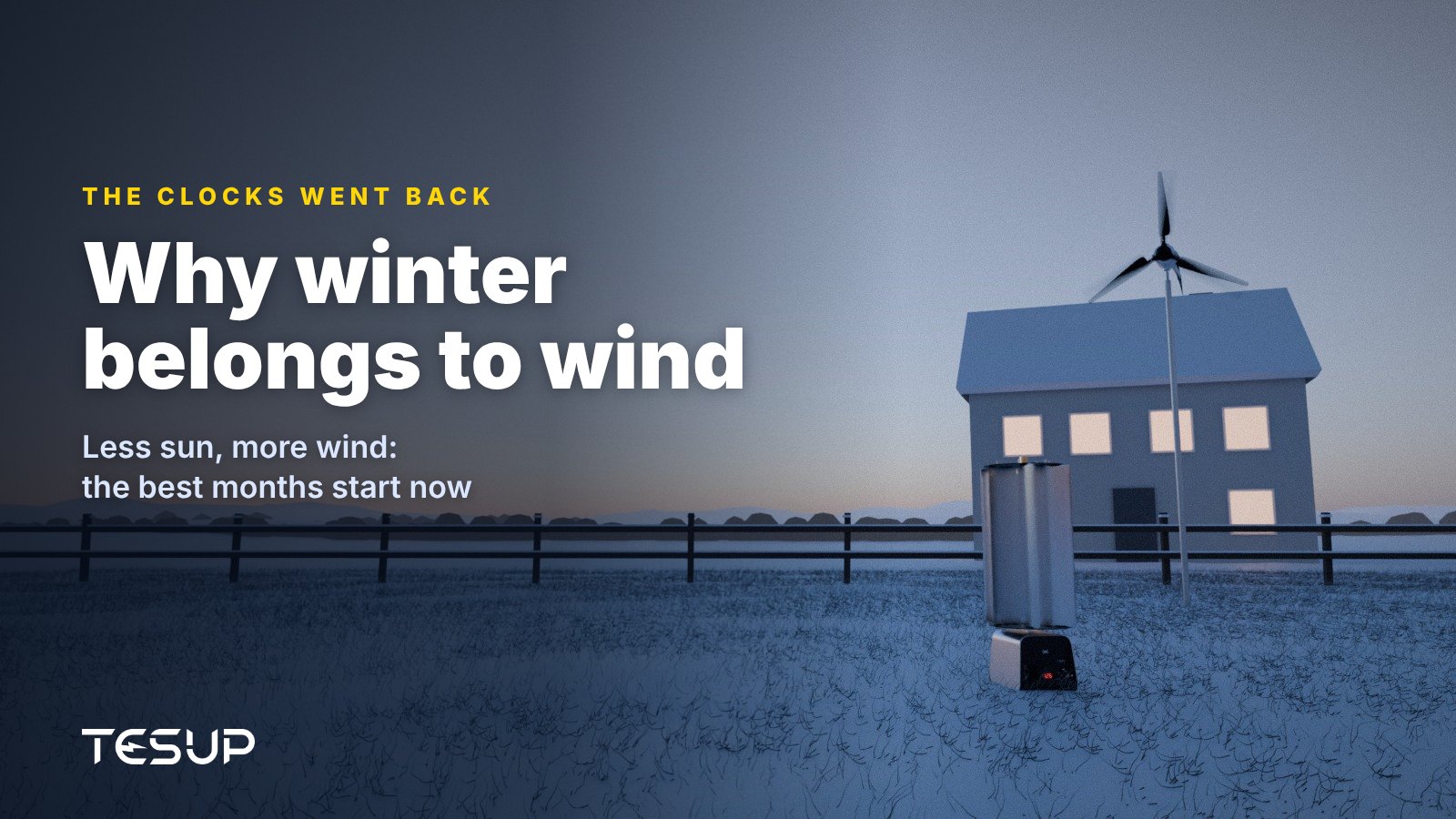
The clocks went back on Sunday 25 October, and the evenings went dark. In London, sunset jumped from 17:49 on Saturday to 16:47 on Sunday. For solar panels, this is the start of the lean months. For a household wind turbine, it is the start of the best ones.
The great winter swap
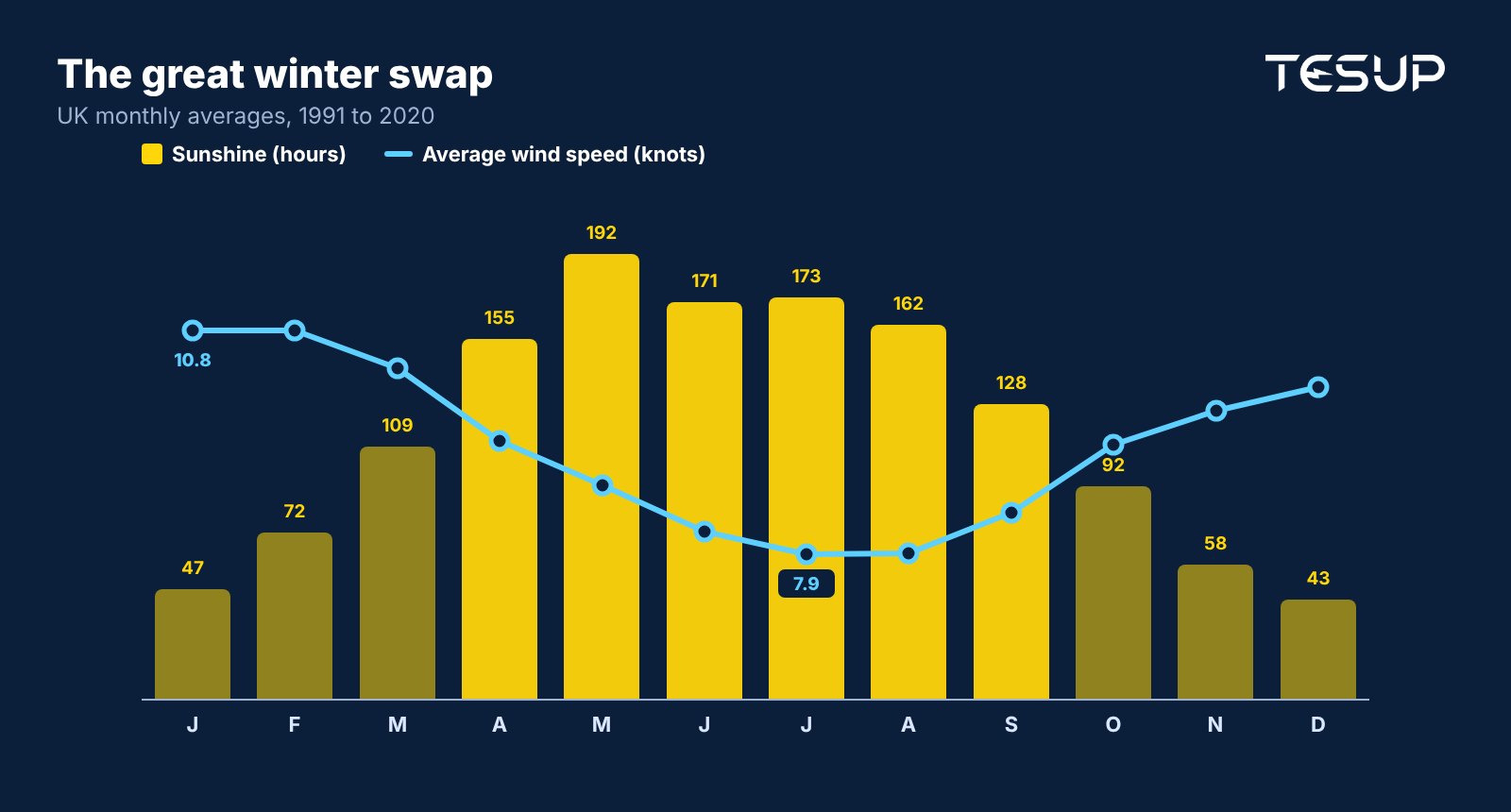
The Met Office's long-term averages for the UK tell the story in two lines. Sunshine falls from 173 hours in July to just 47 hours in January. Over the same months, the average wind speed rises from 7.9 to 10.8 knots, or from about 4 to 5.5 metres per second. As the sun fades, the wind picks up.
A little more wind, a lot more energy
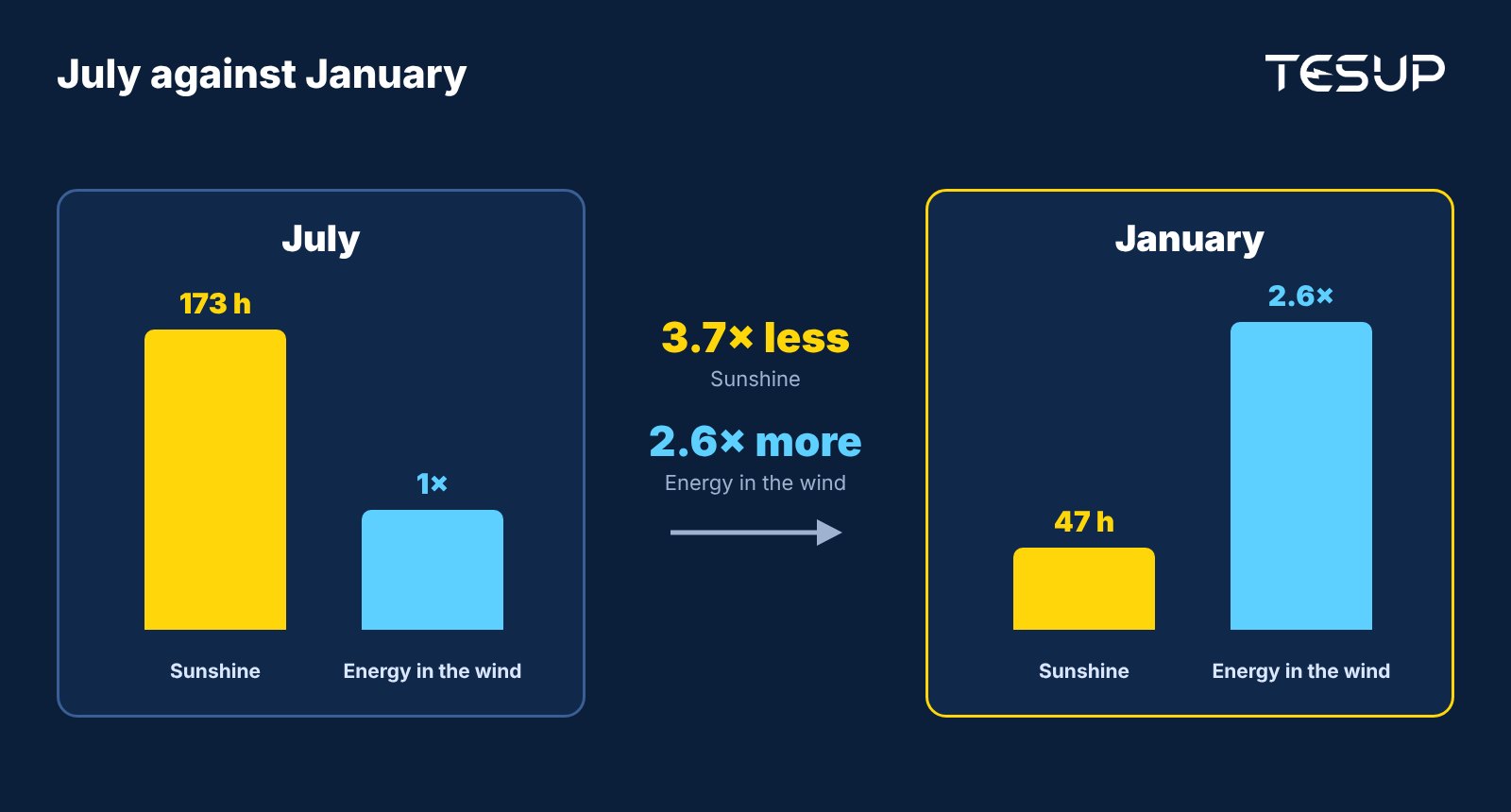
Wind speed and wind energy are not the same thing. The energy in the wind rises with the cube of its speed, so a small step up in speed makes a big difference. January's average wind is about 37% faster than July's, but it carries roughly 2.6 times the energy. In the same months, the sun shines about 3.7 times less.
Two halves of the year
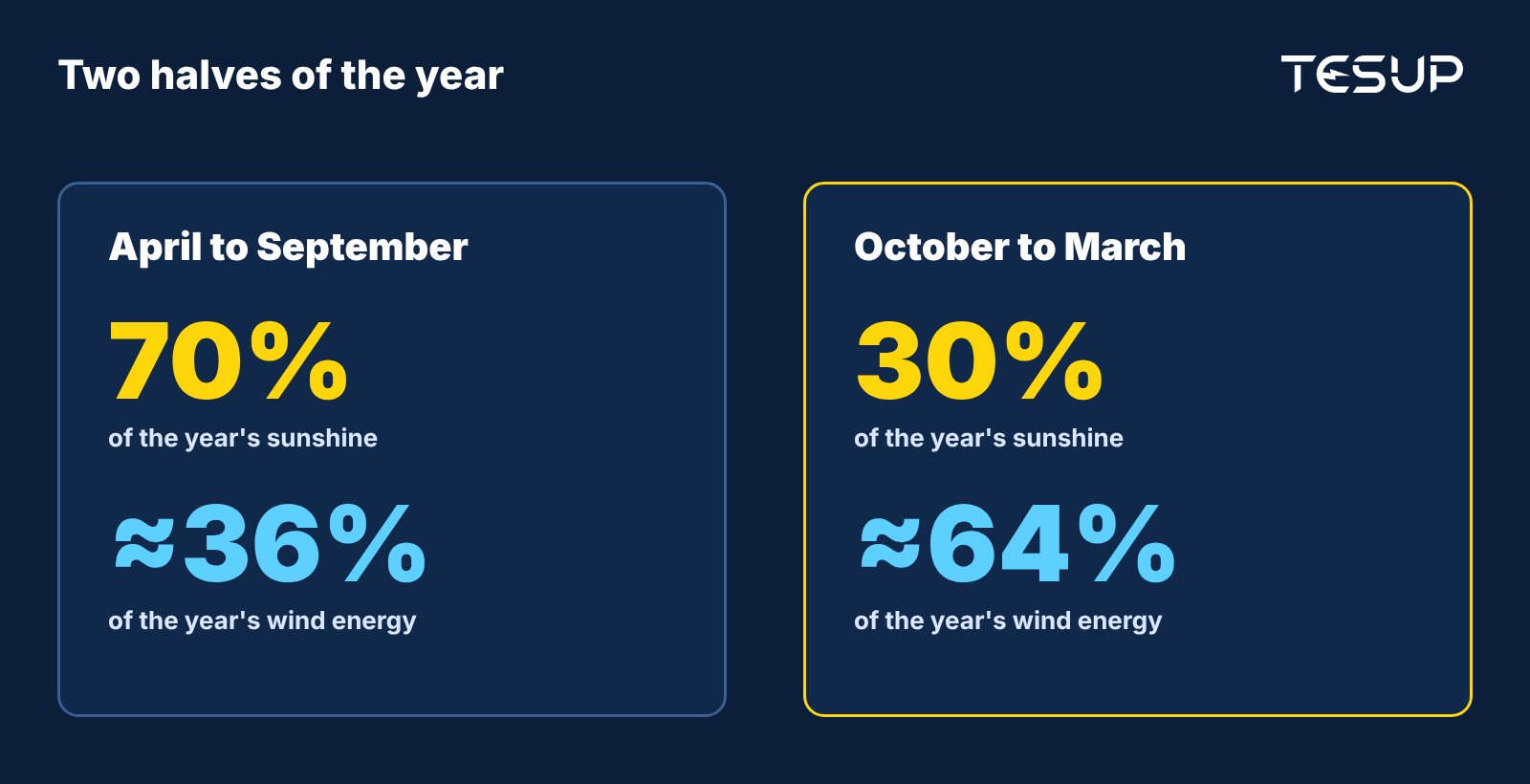
Split the year in two and the pattern is even clearer. October to March brings only 30% of the year's sunshine: 421 of 1,403 hours. By our estimate from the monthly averages, it brings nearly two-thirds of the year's wind energy. Government figures for small renewable installations show the same rhythm: wind does its best work in autumn and winter, solar in spring and summer.
The night shift
Winter evenings are when a home needs light and heat, and by then the sun has already set. The wind does not keep office hours. It blows after dark, through long nights and grey days. Atlas with Low-Wind blades starts turning at just 2 metres per second, well below the January average, so it keeps working through the calmer days too.
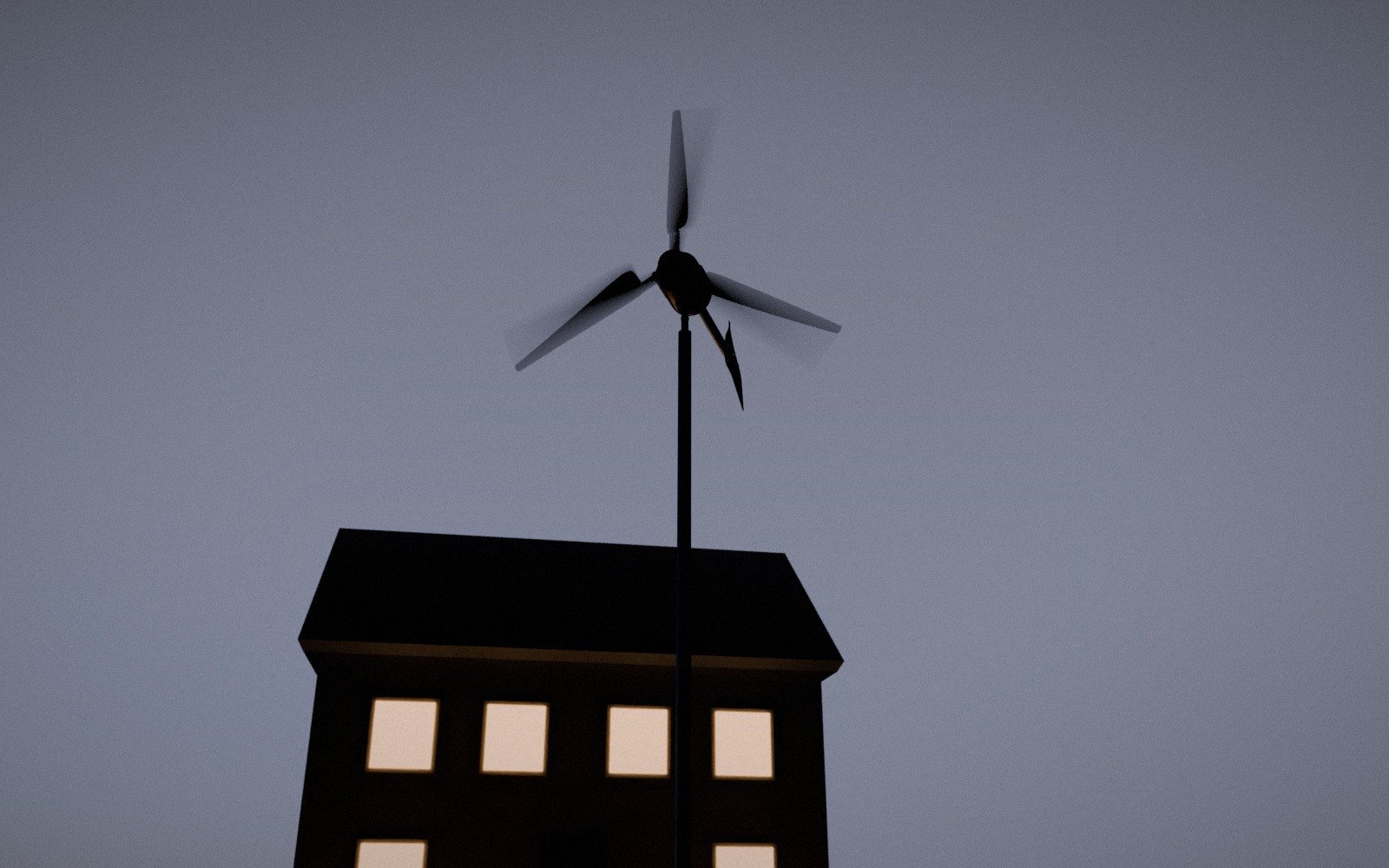
Sun and wind, one team
This is why wind and solar work so well together. Our flexible solar panels lead from April to September, and Atlas and Magnum lead from October to March. Together they spread your home's own power across the whole year, instead of leaving you short just when the evenings are longest.
Sunshine and wind: Met Office UK climate averages, 1991 to 2020 (wind at 10 m). Seasonal pattern: UK government Feed-in Tariff load factor analysis. Sunset times for London on 24 and 25 October 2026. Turbine figures: TESUP product data. Wind energy share estimated from monthly mean wind speeds.
Make the dark months count
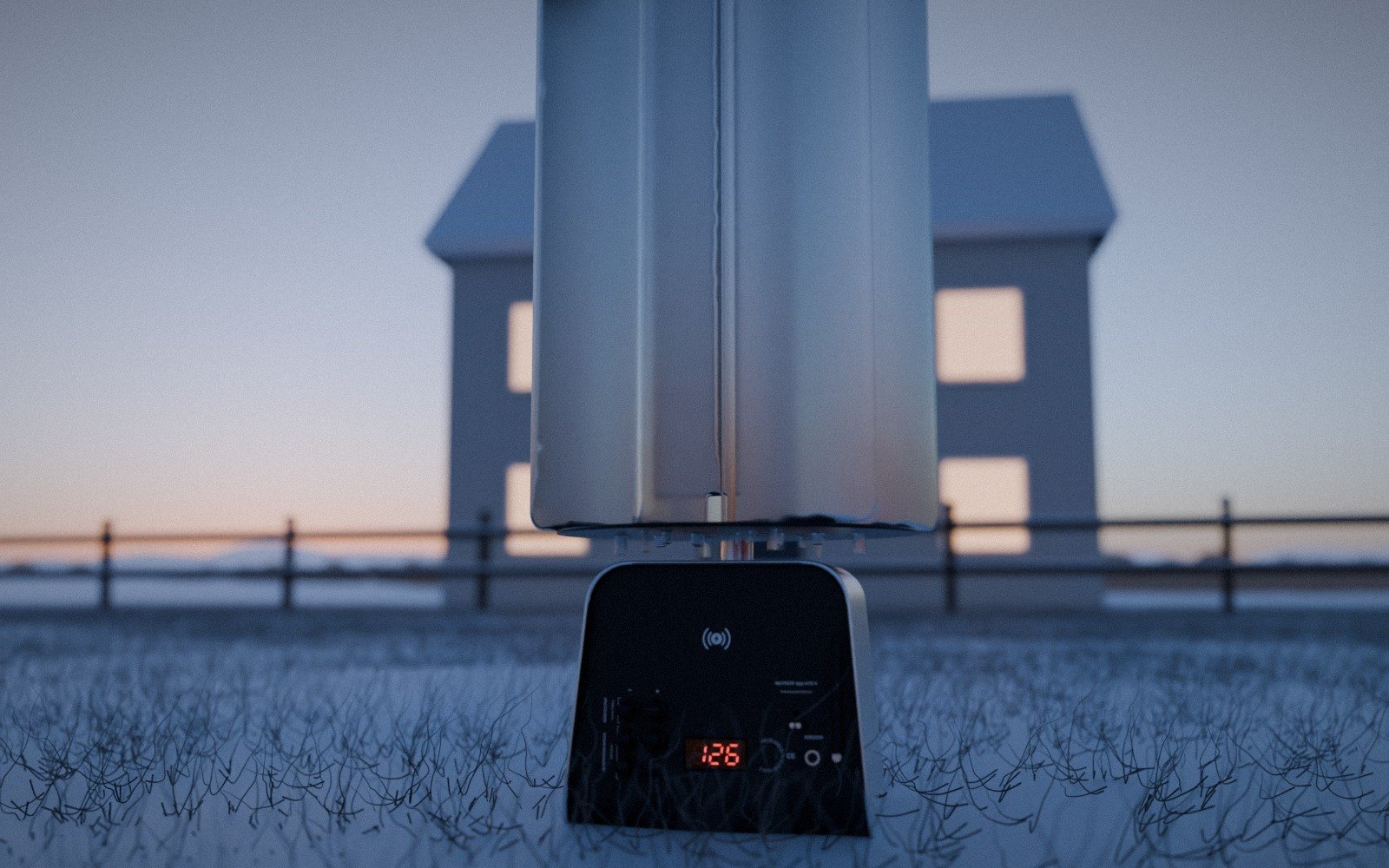
Atlas catches wind from any direction, with a blade set for every site. Magnum is made for open, steady wind.
Explore AtlasExplore Magnum